“Sacred Belonging: The Enduring Presence of the Black Madonna in Italy”
Panel: “Gatekeeping/Safekeeping Material Culture”
2026 Online Symposium, May 3 2026
“Reimagining Goddess Scholarship: At the Edges of Sacred Knowledge”
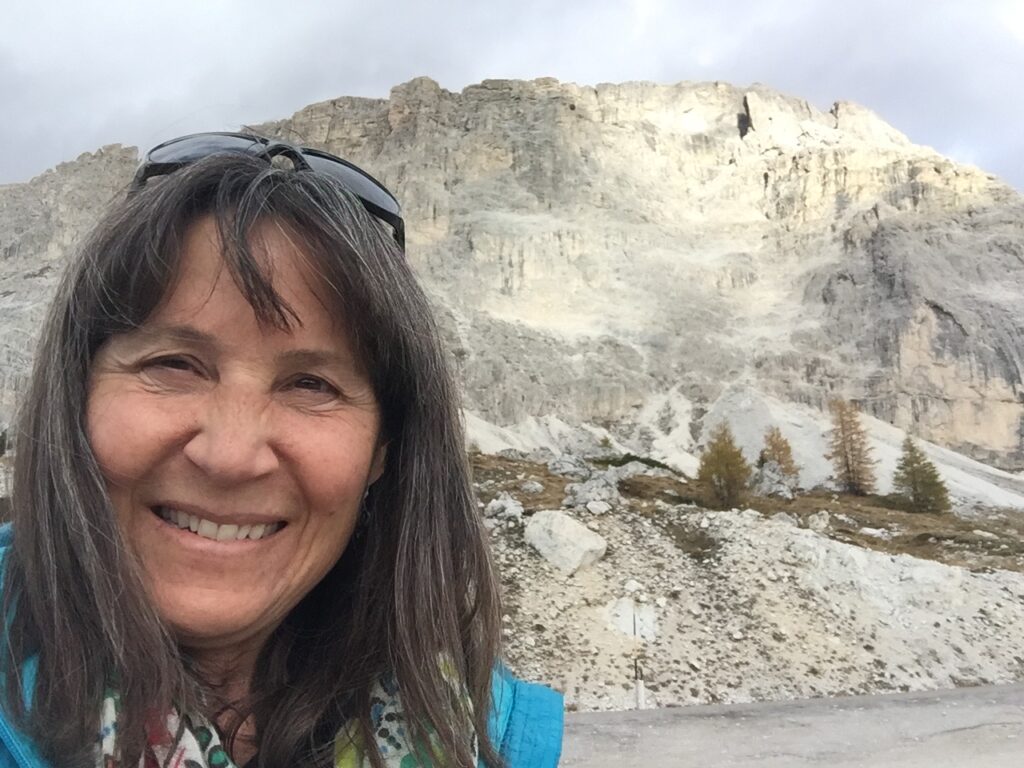
Mary Beth Moser, Ph.D., has traveled widely in Italy to study women’s spirituality, with a focus on the Black Madonna and Italian folk culture. Her publications on this subject include the book Honoring Darkness: Exploring the Power of Black Madonnas in Italy as well as essays in the “She Is Everywhere!” anthology series, founded by Dr. Lucia Chiavola Birnbaum. Last year, Mary Beth returned to the sanctuary of the Black Madonna of Oropa in Piedmont on a personal pilgrimage of gratitude for her first encounter with a Black Madonna thirty years ago. That experience served as a gateway and calling to the scholarly study of her deep ancestry, published as The Everyday Spirituality of Women in the Italian Alps: A Trentino American Woman’s Search for Spiritual Agency, Folk Wisdom, and Ancestral Values. Mary Beth‘s work is nurtured by the wild nature of the Northwest US, by the Ancestors, and by her Dream work. She is the recipient of ASWM’s Kore Award for Best Dissertation in Women and Mythology. For more, see: DEA MADRE: A Black Madonna Resource Center and Ancestral Connections.
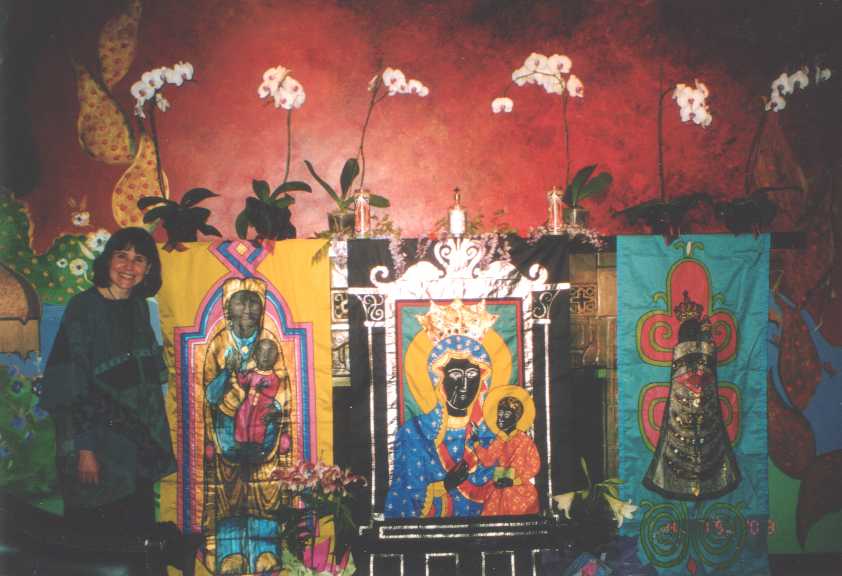
Abstract: The Black Madonna has been a beacon of hope, compassion, and protection for centuries throughout Europe and beyond. Her statues, paintings and frescoes are often the central image of devotion in her sanctuaries, churches and shrines, in a tradition kept alive by millions of pilgrims each year.
More than 10,000 ex-voto tablets bearing her image have survived the ages, testifying to her willingness to help people in times of dire need. In the origin stories of her various representations, she is clear about where she wants her shrines to be built, and how she wants her image to appear.
Even with this long-standing legacy of reverence, paintings of her have been “restored,” statues have been stolen, and frescoes have been covered over. What does it mean when her visage is altered so that it is no longer dark? Can the stories, rituals, and traditions continue to impart the knowledge and values conveyed by the ancient images? Or are vital messages lost when her representation is remade, reimagined, and expressed anew?
In this presentation, I focus on the widespread devotion to the Black Madonna in Italy, citing examples of what has protected – and threatened – her iconography over time. In this era of cultural suppression, omission and erasure, can her presence advise us on what endures, and how?
See symposium updates and register here.