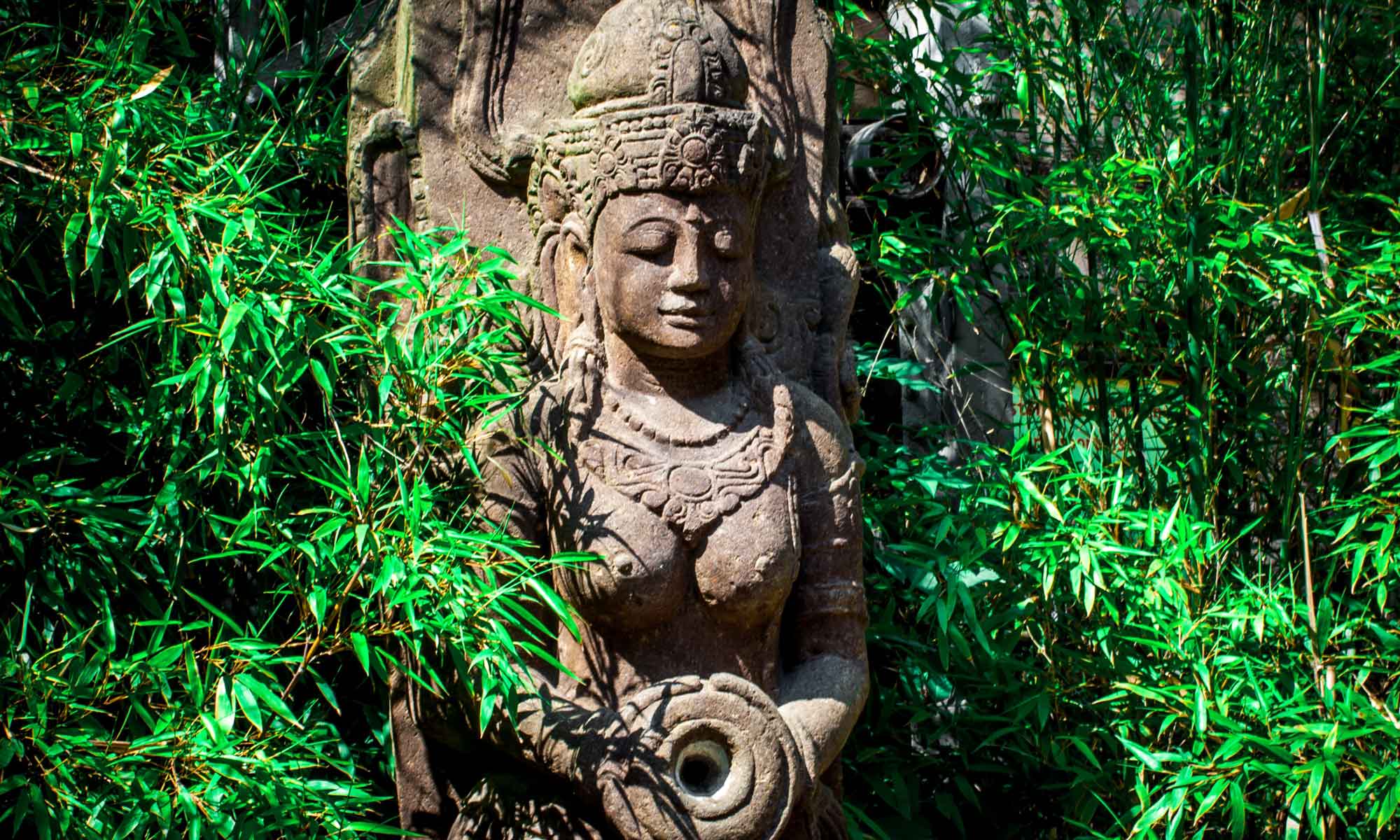
2026 Symposium Presenter: Monica Mody

“Divinity and Life in Nondual Consciousness: Revisioning Our Relations With More-than-Human Worlds

Panel:  Dethroning Human Hubris

2026 Online Symposium, May 3 2026

Reimagining Goddess Scholarship:  At the Edges of Sacred Knowledge


Dr. Monica Modi

Monica Mody, PhD, MFA, is a cross-genre poet, theorist, and educator working at the intersections of earth-based wisdom, transdisciplinary borderlands thinking, and decolonial frameworks of wholeness. She is the author of the poetry collections Wild Fin (Weavers Press, 2024) and Bright Parallel (Copper Coin, 2023) and the cross-genre Kala Pani (1913 Press, 2013). Academic publications include chapters in edited volumes (Mysticism and the MarginsThe Land Remembers Us: Women, Myth, and Nature); peer-reviewed articles (The Transformative Power of Art JournalIntegral Review: A Transdisciplinary and Transcultural Journal For New Thought, Research, and Praxis), as well as hybrid essays in cross-disciplinary research journals (Tarka Journal). She has presented widely at international and US-based conferences, including at the Parliament of World Religions, Pacifica’s Journey Week Conferences, the Center for Black and Indigenous Praxis (California Institute of Integral Studies), the American Academy of Religion-WR, the Association of Writers and Writing Programs conferences, as well as the Association for the Study of Women and Mythology conferences and symposia. Her poems have appeared in periodicals including Poetry InternationalIndian QuarterlyAlmost IslandBoston Review, and Wasafiri as well as in several anthologies. She is the recipient of awards including the Kore Award for Best Dissertation in Women and Mythology (conferred by the Association for the Study of Women and Mythology), the Sparks Prize Fellowship (Notre Dame), the Zora Neale Hurston Award (Naropa), and the TOTO Award for Creative Writing. Mody is Program Chair and Assistant Professor of Mythological Studies at the Pacifica Graduate Institute. Learn more on Monica’s website

Yogini Vrishanana, 10the century, National Museum Delhi
Abstract:    “Divinity and Life in Nondual Consciousness: Revisioning Our Relations With More-than-Human Worlds”

This presentation builds on frameworks of reality that reveal a relational nondual orientation speaking to a structure of presence where divinity and life course and manifest through non-human worlds. These nondual worldviews can create counternarratives and counterknowledges to patriarchal and colonial metaphysics rooted in a self/other binary, which re-enacts and exonerates disenfranchisement, oppression, and violence registering in both human and more-than-human worlds. I discuss these frameworks and notions of divinity and life in contemplation of the mysteries and teachings encoded by therianthropic yoginis, epistemologies of shakti in gynocentric threads of tantric philosophy, and animistic systems. Through a critical and remythologized engagement, I propose a shift in consciousness that can contribute to expanding precolonial and decolonial genealogies of care, especially as regards our relations with more-than-human worlds.


2026 Symposium Presenter: Apostolia Papadamaki

“Anamnesis: Embodying Ancient Greek Mysticism Through Ceremonial Performances”

Panel: Revitalizing Sacred Ceremony

2026 Online Symposium, May 3 2026

Reimagining Goddess Scholarship:  At the Edges of Sacred Knowledge

Apostolia Papadamaki

Apostolia Papadamaki is a performance artist, ceremonial facilitator, and wisdom keeper working at the intersection of embodied myth, sacred performance, and living Hellenic traditions. She is the founder and artistic director of Anamnesis, a long-term artistic project devoted to ceremonial performance in archaeological sites. For over three decades, she has created site-specific, participatory ritual performances in archaeological sites across Greece, collaborating with professional artists, local communities, women and children to reactivate ancient sacred spaces as fields of embodied remembrance.

Her work is grounded in the ancient Greek concept of Anamnesis, the act of remembering through direct experience rather than intellectual transmission as articulated by Plato. Central to her practice is Orchesis, the ceremonial synthesis of sacred word (logos), music (melos), and embodied movement (kinesis), described by ancient sources as indispensable to ritual life in the ancient Greek world. Through orchesis, myth is approached not as narrative alone, but as a living presence encountered through the body. Apostolia’s performances have taken place in temples, sanctuaries, and museums sacred to Hellenic goddesses and gods. Her creative process weaves together scholarly research, archaeological dialogue, intuitive vision, and dream incubation, often revealing correspondences later confirmed by material evidence and historical sources. These participatory performances unfold as living ceremonies, inviting participants into direct relationship with myth, land, and memory.

Apostolia’s work has been presented internationally in festivals and cultural contexts across Europe,and beyond, supported by major public and cultural institutions. She is also the founder of The Mysteries of Light, a contemporary women’s mystery school rooted exclusively in Hellenic wisdom traditions. Apostolia continues to mentor women worldwide in embodied spiritual practice, mythic remembrance, and ritual art as pathways for re-engaging sacred knowledge in the present.

See Apostolia’s work:  Discover Anamnesis, Site Specific Performances 

Abstract: It is impossible to determine when human beings first began to observe the movements of the sun and moon, the wandering of the planets, or the mysterious phenomena of the natural world. Across ancient civilizations, the rhythms of light and darkness, growth and decay, stirred awe and fear before the vastness of the cosmos.  Among those who gave profound expression to this cosmic awareness were the Ancient Greeks. By observing the rising and setting of the sun, the waxing and waning of the moon, and the cycles of season they developed ceremonies and rituals so they can understand and to unite with nature, with the cosmos, and with the Divine. 

Long before classical Greek civilization, the ancestors of the Greeks inhabited the same land and their lineage remains rooted in this same landscape to this day. Within this living continuum emerged the Orphic tradition, centered on Orpheus, regarded as the first theologian of ancient Greece. The Orphics articulated profound visions of cosmos, nature, and the Divine, not as abstract theory, but as initiatory knowledge to be lived.  From these teachings arose the rituals and mysteries of ancient Greece: sacred practices offering human beings the inner means to unite with the All, to transcend the fear of death, and to pursue a life of virtue. 

Today, the question becomes: how might this initiatory knowledge be embodied in our time? 

This presentation explores Anamnesis as an embodied methodology through which Ancient Greek mysticism may be lived in the present. Drawing on the Platonic understanding of ἀνάμνησις as recollection through direct experience, as articulated by Plato, I approach sacred knowledge not as historical content to be reconstructed, but as presence to be embodied.  For over three decades, I have created site-specific, participatory ceremonial performances in archaeological spaces across Greece. These works do not attempt to replicate ancient rites. Rather, they cultivate conditions in which embodied remembrance may arise.

2026 Symposium Presenter: Kay Turner

“Dining with Hekate:  Embodied Knowledge as a Source of Nourishment”

Panel: “Revitalizing Sacred Ceremony”

2026 Online Symposium, May 3 2026

Reimagining Goddess Scholarship:  At the Edges of Sacred Knowledge

Dr. Kay Turner is an artist and scholar working across disciplines including performance, writing, music, and folklore. Since 2012 Turner’s performance works and writing have revolved around an exploration of the witch figure in folklore and history. She has worked with artist Elizabeth Insogna on several projects exploring the Greek goddess Hekate, including “Healing Persephone Wounds” (National Art Gallery, NYC, 2021) and “A Hekate Supper”, Parts 1 and 2 (Five Myles Gallery, Brooklyn, NY, 2022). She is the founding editor and publisher of Lady-Unique-Inclination-of-the-Night, a journal of art and the goddess (1976-1983). Her books include What a Witch: Before and After, with Zini Lardieri (2021); Transgressive Tales: Queering the Grimms, with Pauline Greenhill (2012) and Beautiful Necessity: The Art and Meaning of Women’s Altars (1999). She holds a PhD in Folklore and Anthropology (UT Austin) and taught for 20 years in the Performance Studies Department at NYU. Turner is a past president of the American Folklore Society. She lives and works in Brooklyn, NY.

Presentation Description:  Hekate has often been called the Goddess of Witches. She was and is that, but also so much more. In ancient Greece her worship took place in temples and also at house-post altars and crossroad shrines. At these shrines devotees gathered to feast—their meal was called “a Hekate supper—and make petitions for Hekate’s intercession. 

My presentation proposes a feast with Hekate getting to know her many facets including her lineage, her epithets, her invocations, her rites, her symbols, her realms, and her alliances. I have done a number of ritual performances that attempt to deconstruct aspects of Hekate through ritual means. This lecture is largely based on a performance called “A Hekate Supper, Parts 1 and 2” that I did in 2022 at Five Myles Gallery in Brooklyn. This, as well as other performances I have done in my “What A Witch” series begun in 2012, is framed by my practice of embodied knowledge: sealing the history and folklore of various witch figures in ritual experience. Each “What A Witch” begins with a performative lecture followed by a ritual that invites participation from the audience. 

This symposium presentation must of course forego full-on ritual but I will discuss Hekate in light of embodied knowledge and queer pedagogy. I highlight Hekate’s recognition and repair of brokenness as seen in her role in the myth of Demeter’s separation from Persephone. Hekate heard the cries of Persephone and lighted the way to her recovery.To repair brokenness is her moral charge. She urges commingling, links worlds together, threads connections. A goddess sought after to repair brokenness, her work was made most potent through her union of the living and the dead. 

I also share some research and thinking that came out of a recent ritual performance at the School of Visual Arts *NYC) called “Aphrodite’s Mirror/Hekate’s Reflection.” The performance explores beauty and hag-ery in an exchange of gifts between Aphrodite and Hekate. A critique of ageism but also a solution, Aphrodite and Hekate, both known as transgressors of boundaries, are viewed as equals and allies in dismantling false hierarchies. 

2026 Symposium Presenter: Cutcha Risling Baldy

2026 Online Symposium: May 3, 2026

“We Are Dancing For You: Native Feminisms and the Revitalization of Women’s Coming-of-Age Ceremonies in California”

Panel: “Revitalizing Sacred Ceremony”

Dr. Cutcha Risling Baldy

Dr. Cutcha Risling Baldy is an Associate Professor of Native American Studies at Cal Poly Humboldt who researches Indigenous feminisms, California Indians, Environmental Justice, Traditional Ecological Knowledge and decolonization. She is the Co-Director of the NAS Rou Dalagurr Food Sovereignty Lab & Traditional Ecological Knowledges Institute where she leads several research projects focused on the resurgence of Indigenous Science and place-based learning. In 2025 Dr. Risling Baldy along with Co-Director Dr. Kaitlin Reed were awarded the James Irvine Foundation Leadership Award for their work with the lab.

Dr. Risling Baldy is the Principal Investigator for the “Food for Indigenous Futures Project” which looks at connections between food justice, food sovereignty, mental health, and substance abuse prevention for Native American Youth. ​She has also helped organize several community facing events like the Northern California #LandBack Symposium, the Water Advocacy & Water Protectors Certificate Program, the Humboldt Indigenous Foods Festival, and the California Indian Conference. Dr. Risling Baldy is also the Program Coordinator for the Masters of Social Science in Environment & Community.

Her book: We Are Dancing For You: Native Feminisms and the Revitalization of Women’s Coming-of-Age Ceremonies received “Best First Book in Native American and Indigenous Studies” at the 2019 Native American Indigenous Studies Association Conference. The book uses a framework of Native Feminisms to locate revitalization within a broad context of decolonizing praxis and considers how this renaissance of women’s coming-of-age ceremonies confounds ethnographic depictions of Native women; challenges anthropological theories about menstruation, gender, and coming-of-age; and addresses gender inequality and gender violence within Native communities. The book is available with the University of Washington Press. She received her Ph.D. in Native American Studies at UC Davis; her M.F.A. in Creative Writing from San Diego State University; and her B.A. in Psychology with a Specialization in Health and Development from Stanford University. ​

In 2007, Dr. Risling Baldy co-founded the Native Women’s Collective, a nonprofit organization that supports the continued revitalization of Native American arts and culture. She is Hupa, Karuk, and Yurok and enrolled in the Hoopa Valley Tribe.

Hupa Flower Dancers, photo by Cutcha Risling Baldy

Abstract: This presentation focuses on the revitalization of the Hupa Flower Dance ceremony and documents how women in the Hoopa Valley Tribe worked collectively to restore a traditional women’s coming-of-age ceremony that had been disrupted by colonization. Drawing from oral histories, archival materials, community collaboration, and personal experience the book explores how cultural revitalization operates as both an intellectual intervention and a lived political act.  “Native feminisms” are frameworks grounded in Indigenous epistemologies rather than Western feminist paradigms that also challenge colonial narratives that have framed Indigenous ceremonies, in particular those related to menstruation and girlhood. Instead, this shows how the Flower Dance affirms gender balance, community responsibility, and the sacredness of young women’s transitions into adulthood. By centering Indigenous women’s voices this reframes coming-of-age ceremonies as sites of empowerment, survivance, and sovereignty. Reclaiming ceremony is not merely symbolic; it actively restructures community relationships, restores cultural knowledge, and resists ongoing settler colonialism. Blending memoir, ethnography, and theory, We Are Dancing for You ultimately positions Indigenous women’s ceremonial practices as vital to decolonial futures.

See Cutcha’s work in the video Honoring Women: Reclaiming Coming of Age Ceremony


2026 Symposium Presenter: Arieahn Matamonasa Bennett

“Western Science is ‘half-brained.’ Indigenous Elders had it right: Rethinking Animal-Human relationships and research

Panel: “Dethroning Human Hubris”

2026 Online Symposium, May 3 2026

Reimagining Goddess Scholarship:  At the Edges of Sacred Knowledge


Arieahn Matamonasa Bennett

Arieahn Matamonasa Bennett, PhD, joined ASWM after completing her Ph.D. in 2005, mentored by the late Patricia Monaghan, and has been a frequent contributor and speaker and a member of the ASWM Advisory Board. She completed her MA and Ph.D. in clinical psychology from Fielding Graduate University and is a licensed psychologist. She is an Associate Professor with the School of Continuing and Professional Studies (SCPS), at DePaul University where she has taught for the past two decades. She has widely published and taught in multidisciplinary research areas: Cross-cultural, ethnic minority & indigenous psychology, women’s psychology and the history, science and psychology of human-animal relationships. In addition to teaching, she maintains a small private practice which incorporates Equine Assisted Psychotherapy and experiential learning in nature as a part of holistic therapeutic practice.

Presentation Description:  We have deep and powerful experiences with horses and nature that are difficult to describe and quantify with our rational, scientific minds. Understanding and integration happens in the metaphoric mind of dreams, symbols, storytelling, myth, dance, art, and music. Based on theories ranging from Jungian (Depth) psychology to the pioneering work of Samples (1976, 1993) and (ancient) indigenous scientific paradigms (Cajate, 2000; Couture, 2013; Wilson, 2008), animal-human studies are given what is often a missing or invisible lens. The metaphoric mind, or ‘nature mind’ is our oldest mind and has been developing for about three million years. Western society and its educational systems focus on mainly left-brain functions such as linear thinking and language. Metaphoric, symbolic perception and intuitive, right-brain activity has been neglected. As language and the rational mind develops, the holistic experience of the metaphoric mind eventually recedes into the subconscious, but it can, however, still be called on or accessed during creative or spiritual experiences. Metaphoric mind processes are tied to creativity, perception, images, physical senses, and intuition. “This presentation explores the ways in which accessing and giving equal regard to the metaphoric mind holds important keys to a more whole-brained scientific paradigm, shaping, deepening, and advancing our understanding the animal-human bond and our connections to the natural world.