2026 Symposium Presenter: Monica Mody

“Divinity and Life in Nondual Consciousness: Revisioning Our Relations With More-than-Human Worlds

Panel:  Dethroning Human Hubris

2026 Online Symposium, May 3 2026

Reimagining Goddess Scholarship:  At the Edges of Sacred Knowledge


Dr. Monica Modi

Monica Mody, PhD, MFA, is a cross-genre poet, theorist, and educator working at the intersections of earth-based wisdom, transdisciplinary borderlands thinking, and decolonial frameworks of wholeness. She is the author of the poetry collections Wild Fin (Weavers Press, 2024) and Bright Parallel (Copper Coin, 2023) and the cross-genre Kala Pani (1913 Press, 2013). Academic publications include chapters in edited volumes (Mysticism and the MarginsThe Land Remembers Us: Women, Myth, and Nature); peer-reviewed articles (The Transformative Power of Art JournalIntegral Review: A Transdisciplinary and Transcultural Journal For New Thought, Research, and Praxis), as well as hybrid essays in cross-disciplinary research journals (Tarka Journal). She has presented widely at international and US-based conferences, including at the Parliament of World Religions, Pacifica’s Journey Week Conferences, the Center for Black and Indigenous Praxis (California Institute of Integral Studies), the American Academy of Religion-WR, the Association of Writers and Writing Programs conferences, as well as the Association for the Study of Women and Mythology conferences and symposia. Her poems have appeared in periodicals including Poetry InternationalIndian QuarterlyAlmost IslandBoston Review, and Wasafiri as well as in several anthologies. She is the recipient of awards including the Kore Award for Best Dissertation in Women and Mythology (conferred by the Association for the Study of Women and Mythology), the Sparks Prize Fellowship (Notre Dame), the Zora Neale Hurston Award (Naropa), and the TOTO Award for Creative Writing. Mody is Program Chair and Assistant Professor of Mythological Studies at the Pacifica Graduate Institute. Learn more on Monica’s website

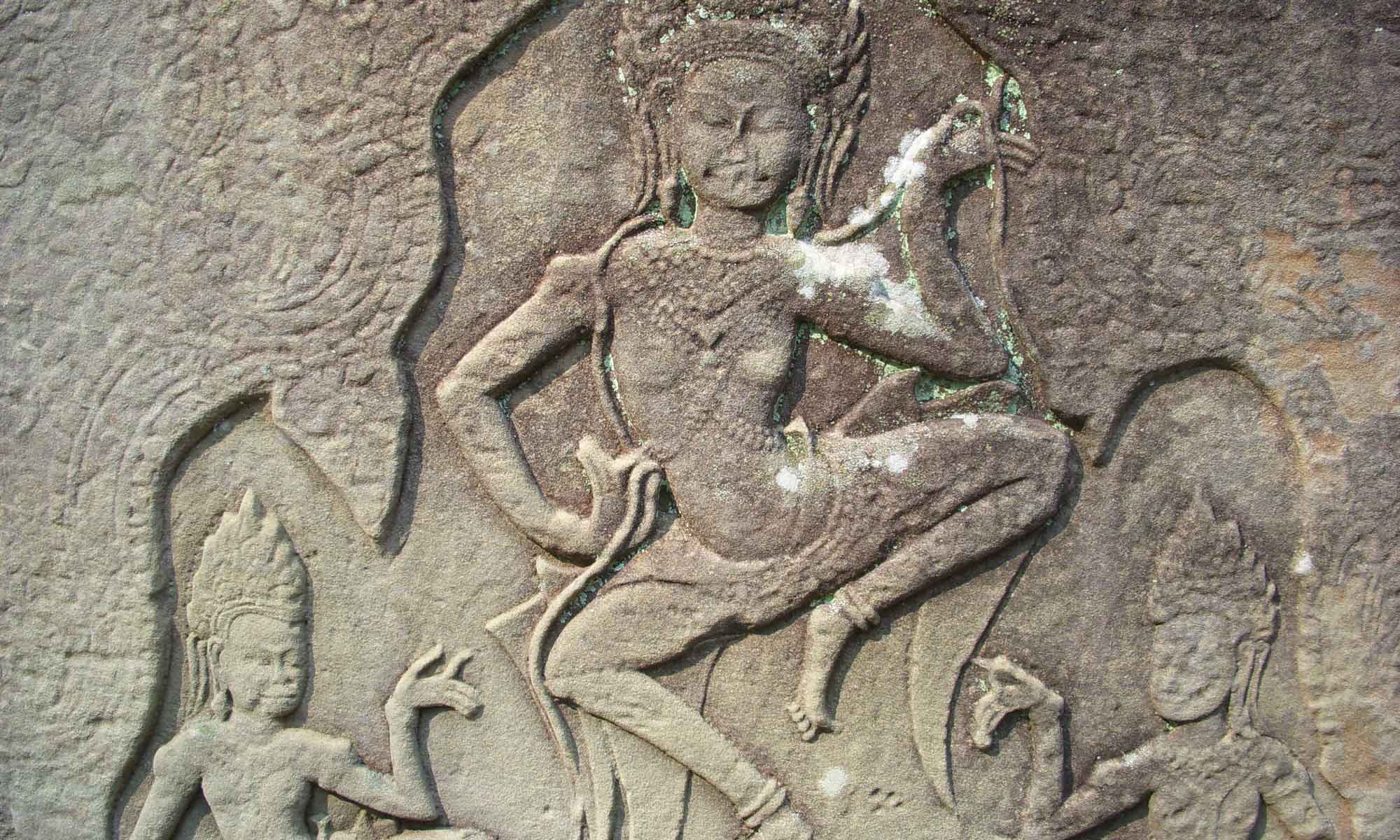
Yogini Vrishanana, 10the century, National Museum Delhi
Abstract:    “Divinity and Life in Nondual Consciousness: Revisioning Our Relations With More-than-Human Worlds”

This presentation builds on frameworks of reality that reveal a relational nondual orientation speaking to a structure of presence where divinity and life course and manifest through non-human worlds. These nondual worldviews can create counternarratives and counterknowledges to patriarchal and colonial metaphysics rooted in a self/other binary, which re-enacts and exonerates disenfranchisement, oppression, and violence registering in both human and more-than-human worlds. I discuss these frameworks and notions of divinity and life in contemplation of the mysteries and teachings encoded by therianthropic yoginis, epistemologies of shakti in gynocentric threads of tantric philosophy, and animistic systems. Through a critical and remythologized engagement, I propose a shift in consciousness that can contribute to expanding precolonial and decolonial genealogies of care, especially as regards our relations with more-than-human worlds.


Scholar Salon 95 (Recording now available)

Scholar Salon #95: Dr. Normandi Ellis sheds light on the ways in which considering the ancient "living intelligences" of the planets pcan rovide inspiration for effectively engaging in our life tasks and performing the important activities of life at the right time

LOGIN STATUS: You are not logged in. If you are a current member, please LOGIN BELOW.  

Hello! If you would like to view this content, please SIGN UP/RENEW to become an member of ASWM.

Email us if you need assistance anytime at membership@womenandmyth.org - The ASWM Membership Team

2026 Symposium Presenter: Apostolia Papadamaki

“Anamnesis: Embodying Ancient Greek Mysticism Through Ceremonial Performances”

Panel: Revitalizing Sacred Ceremony

2026 Online Symposium, May 3 2026

Reimagining Goddess Scholarship:  At the Edges of Sacred Knowledge

Apostolia Papadamaki

Apostolia Papadamaki is a performance artist, ceremonial facilitator, and wisdom keeper working at the intersection of embodied myth, sacred performance, and living Hellenic traditions. She is the founder and artistic director of Anamnesis, a long-term artistic project devoted to ceremonial performance in archaeological sites. For over three decades, she has created site-specific, participatory ritual performances in archaeological sites across Greece, collaborating with professional artists, local communities, women and children to reactivate ancient sacred spaces as fields of embodied remembrance.

Her work is grounded in the ancient Greek concept of Anamnesis, the act of remembering through direct experience rather than intellectual transmission as articulated by Plato. Central to her practice is Orchesis, the ceremonial synthesis of sacred word (logos), music (melos), and embodied movement (kinesis), described by ancient sources as indispensable to ritual life in the ancient Greek world. Through orchesis, myth is approached not as narrative alone, but as a living presence encountered through the body. Apostolia’s performances have taken place in temples, sanctuaries, and museums sacred to Hellenic goddesses and gods. Her creative process weaves together scholarly research, archaeological dialogue, intuitive vision, and dream incubation, often revealing correspondences later confirmed by material evidence and historical sources. These participatory performances unfold as living ceremonies, inviting participants into direct relationship with myth, land, and memory.

Apostolia’s work has been presented internationally in festivals and cultural contexts across Europe,and beyond, supported by major public and cultural institutions. She is also the founder of The Mysteries of Light, a contemporary women’s mystery school rooted exclusively in Hellenic wisdom traditions. Apostolia continues to mentor women worldwide in embodied spiritual practice, mythic remembrance, and ritual art as pathways for re-engaging sacred knowledge in the present.

See Apostolia’s work:  Discover Anamnesis, Site Specific Performances 

Abstract: It is impossible to determine when human beings first began to observe the movements of the sun and moon, the wandering of the planets, or the mysterious phenomena of the natural world. Across ancient civilizations, the rhythms of light and darkness, growth and decay, stirred awe and fear before the vastness of the cosmos.  Among those who gave profound expression to this cosmic awareness were the Ancient Greeks. By observing the rising and setting of the sun, the waxing and waning of the moon, and the cycles of season they developed ceremonies and rituals so they can understand and to unite with nature, with the cosmos, and with the Divine. 

Long before classical Greek civilization, the ancestors of the Greeks inhabited the same land and their lineage remains rooted in this same landscape to this day. Within this living continuum emerged the Orphic tradition, centered on Orpheus, regarded as the first theologian of ancient Greece. The Orphics articulated profound visions of cosmos, nature, and the Divine, not as abstract theory, but as initiatory knowledge to be lived.  From these teachings arose the rituals and mysteries of ancient Greece: sacred practices offering human beings the inner means to unite with the All, to transcend the fear of death, and to pursue a life of virtue. 

Today, the question becomes: how might this initiatory knowledge be embodied in our time? 

This presentation explores Anamnesis as an embodied methodology through which Ancient Greek mysticism may be lived in the present. Drawing on the Platonic understanding of ἀνάμνησις as recollection through direct experience, as articulated by Plato, I approach sacred knowledge not as historical content to be reconstructed, but as presence to be embodied.  For over three decades, I have created site-specific, participatory ceremonial performances in archaeological spaces across Greece. These works do not attempt to replicate ancient rites. Rather, they cultivate conditions in which embodied remembrance may arise.

Announcing Scholar Salon 97: Register for March 19

“Rewriting Human Strength: What Female Biology Reveals About Survival, Performance, and Power”

with Starre Vartan

Thursday,  March 19, 2026 at 3:00 PM Eastern Time  

REGISTER HERE


Angarag, the five year old Mongolian Horse Archer (2021)

For centuries, we’ve been told a simple story: men are strong, women are weak. It’s a myth so deeply embedded in modern culture that it often feels like biological fact. But when we look closely at the science, that story begins to unravel. Yes, male bodies tend to excel at generating short bursts of upper-body power. But strength is far more complex than how much weight someone can bench press. When we expand our definition beyond visible muscle mass, a very different picture emerges—one grounded in physiology, evolution, and endurance.

The female body has remained remarkably consistent in its core design for tens of thousands of years. Across that time, it evolved not merely to reproduce, but to survive environmental stress, food scarcity, infection, migration, and physical strain. The result is a body built for durability.

Women mount faster and more robust immune responses to many pathogens. Female metabolism is metabolically flexible, allowing for more efficient fat utilization during sustained effort and greater protection during caloric stress. Women often demonstrate superior fatigue resistance and recovery in endurance contexts. Even heightened perceptual sensitivity—long dismissed as weakness—reflects neurological responsiveness that enhances environmental awareness and social cohesion.

This talk reframes strength as a multidimensional biological reality rather than a single performance metric. Drawing from evolutionary biology, physiology, and contemporary research, it reveals the adaptive advantages embedded in female bodies.  When we redefine strength, we don’t just update the science—we challenge a cultural narrative that has shaped medicine, sport, and social norms for generations—and how we understand history.

Starre Vartan

Starre Vartan writes about health & science, the natural world, and the female body—especially the parts that are strong, misunderstood, or totally ignored. Her science journalism and investigative reporting has been published in National Geographic, Scientific American, Slate, The Washington Post, Undark, New Scientist, and other outlets where curiosity—and research rigor—are job requirements. She’s also published essays in Aeon’s Psyche, Candidly, and in her newsletter, Palimpsest of Flesh, as well as short fiction.

Her second book, The Stronger Sex: What Science Tells Us About the Power of the Female Body (Seal Press/Hachette, July 2025), has been published in the US & Canada, the United Kingdom, Australia, New Zealand, and is forthcoming in China and Korea. It is a science-backed, myth-busting love letter to the female body—an exploration of the female body’s sensitivity, endurance, immunity, longevity, and more. In addition to her science writing, Starre is a 5Rhythms and ecstatic dancer, trailrunner and weightlifter, and a ceramicist of surrealist female goddesses. She splits her time between the Pacific Northwest of the U.S. and the Illawarra Coast south of Sydney, Australia, and grew up in New York. A dual citizen of the US and Australia, Starre has a Bachelors of Science in Geology from Syracuse University and a Master of Fine Arts in Writing from Columbia University. 

 ~~~~~~~~~~~~~~~~~~~~~~~~~~~~

Watch our newsletter for updated Salon announcements.

Benefit of Membership - ASWM

This Salon recording will also be available to members when processed after the event. 


2026 Symposium Presenter: Kay Turner

“Dining with Hekate:  Embodied Knowledge as a Source of Nourishment”

Panel: “Revitalizing Sacred Ceremony”

2026 Online Symposium, May 3 2026

Reimagining Goddess Scholarship:  At the Edges of Sacred Knowledge

Dr. Kay Turner is an artist and scholar working across disciplines including performance, writing, music, and folklore. Since 2012 Turner’s performance works and writing have revolved around an exploration of the witch figure in folklore and history. She has worked with artist Elizabeth Insogna on several projects exploring the Greek goddess Hekate, including “Healing Persephone Wounds” (National Art Gallery, NYC, 2021) and “A Hekate Supper”, Parts 1 and 2 (Five Myles Gallery, Brooklyn, NY, 2022). She is the founding editor and publisher of Lady-Unique-Inclination-of-the-Night, a journal of art and the goddess (1976-1983). Her books include What a Witch: Before and After, with Zini Lardieri (2021); Transgressive Tales: Queering the Grimms, with Pauline Greenhill (2012) and Beautiful Necessity: The Art and Meaning of Women’s Altars (1999). She holds a PhD in Folklore and Anthropology (UT Austin) and taught for 20 years in the Performance Studies Department at NYU. Turner is a past president of the American Folklore Society. She lives and works in Brooklyn, NY.

Presentation Description:  Hekate has often been called the Goddess of Witches. She was and is that, but also so much more. In ancient Greece her worship took place in temples and also at house-post altars and crossroad shrines. At these shrines devotees gathered to feast—their meal was called “a Hekate supper—and make petitions for Hekate’s intercession. 

My presentation proposes a feast with Hekate getting to know her many facets including her lineage, her epithets, her invocations, her rites, her symbols, her realms, and her alliances. I have done a number of ritual performances that attempt to deconstruct aspects of Hekate through ritual means. This lecture is largely based on a performance called “A Hekate Supper, Parts 1 and 2” that I did in 2022 at Five Myles Gallery in Brooklyn. This, as well as other performances I have done in my “What A Witch” series begun in 2012, is framed by my practice of embodied knowledge: sealing the history and folklore of various witch figures in ritual experience. Each “What A Witch” begins with a performative lecture followed by a ritual that invites participation from the audience. 

This symposium presentation must of course forego full-on ritual but I will discuss Hekate in light of embodied knowledge and queer pedagogy. I highlight Hekate’s recognition and repair of brokenness as seen in her role in the myth of Demeter’s separation from Persephone. Hekate heard the cries of Persephone and lighted the way to her recovery.To repair brokenness is her moral charge. She urges commingling, links worlds together, threads connections. A goddess sought after to repair brokenness, her work was made most potent through her union of the living and the dead. 

I also share some research and thinking that came out of a recent ritual performance at the School of Visual Arts *NYC) called “Aphrodite’s Mirror/Hekate’s Reflection.” The performance explores beauty and hag-ery in an exchange of gifts between Aphrodite and Hekate. A critique of ageism but also a solution, Aphrodite and Hekate, both known as transgressors of boundaries, are viewed as equals and allies in dismantling false hierarchies.