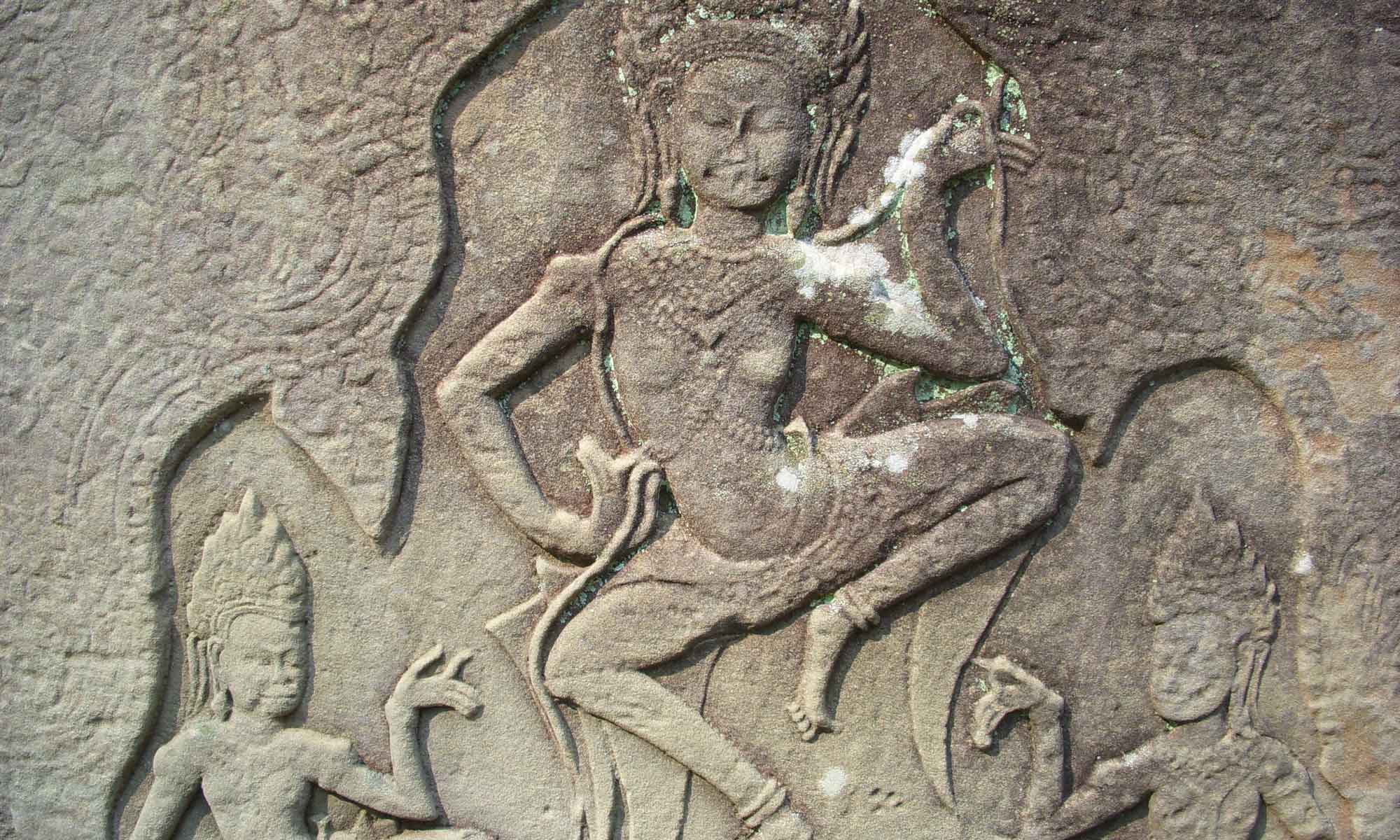


Thousands of prehistoric bird-human-woman and snake-human-woman figurines have been excavated throughout Eurasia. It is my belief that these represented spiritual icons of the Neolithic (from ca. 10,000 BCE to ca. 2000 BCE) and Bronze Ages (ca. 3300 BCE-1900 BCE, varying in different geographic areas). They represented the prehistoric divine feminine, who represented a unity as well as a multiplicity; that is, although she was multifunctional and could take many forms, yet she was also an integral whole. In this wholeness, she manifested life and death, as well as rebirth, and her avian and serpentine iconography give evidence of her different aspects: the beneficent avatar of the prehistoric goddess (life and rebirth), and what is considered in patriarchal society to be the maleficent aspect of the same goddess (death).
In prehistory, the great round of birth, death, and regeneration was honored. Afterwards, after migrations of the patriarchal Proto-Indo-Europeans (ca. 4000 BCE-2800 BCE), death was feared and the goddess was split into the one who gives life (Eurasian Great-Goddesses) and the one who takes life (Eurasian witches and monsters). In the historic age, named goddesses and heroines take on this avian-viperine imagery but the sacred element in many has degenerated. This presentation attempts to extract, from prehistoric archaeological evidence, lessons which we can apply in order to construct a spiritual view which speaks to our time: a spirituality of wholeness similar to the spiritual system embraced by ancient women and men. Thus we look to ancient iconography for an integrating message for the present time.

Miriam Robbins Dexter holds a Ph.D. in ancient Indo-European Studies from UCLA. Her books include Whence the Goddesses: A Source Book (1990); Sacred Display: Divine and Magical Female Figures of Eurasia (2010, with Victor Mair) (2012 ASWM Sarasvati award); and Foremothers of the Women’s Spirituality Movement: Elders and Visionaries (2015, with Vicki Noble) (Susan Koppelman award, 2016). Miriam is the author of over fifty scholarly articles and nine encyclopedia articles on ancient female figures, and she has edited and co-edited sixteen scholarly volumes. These include Marija Gimbutas’ final book, The Living Goddesses (which Miriam also supplemented and finished); a book of articles in her honor after her death (with Edgar Polomé), Varia on the Indo-European Past: Papers in Memory of Marija Gimbutas; and a posthumous book of her articles, The Kurgan Culture and the Indo-Europeanization of Europe: Selected articles from 1952 to 1993, by Marija Gimbutas (with Karlene Jones-Bley). For thirteen years, she taught courses in Latin, Greek, and Sanskrit languages in the department of Classics at USC. For the following sixteen years, she taught courses in comparative myth at UCLA.
She has lectured at the New Bulgarian University (Sophia, Bulgaria) and “Alexandru Ioan Cuza” University (Iasi, Moldavia, Romania).
In Miriam’s life the spiritual merges with her academic life path, and much of what she writes about the Goddesses comes through her meditations.
ASWM Call for Proposals 2027
~~~~~~~~~~
Please note that this event will have a very limited capacity for Zoom presentations. We assume that all proposals are for in-person presentations unless otherwise indicated.
~~~~~~~~~~
Our conference will take place at the Wyndham Philadelphia Historic District Hotel, Special conference rates available to attendees.
There will be an option for a special tour of the University of Pennsylvania Museum of Archaeology and Anthropology, one of the nation’s pre-eminent museums, on Thursday, April 8.
Watch this site for registration and additional information.