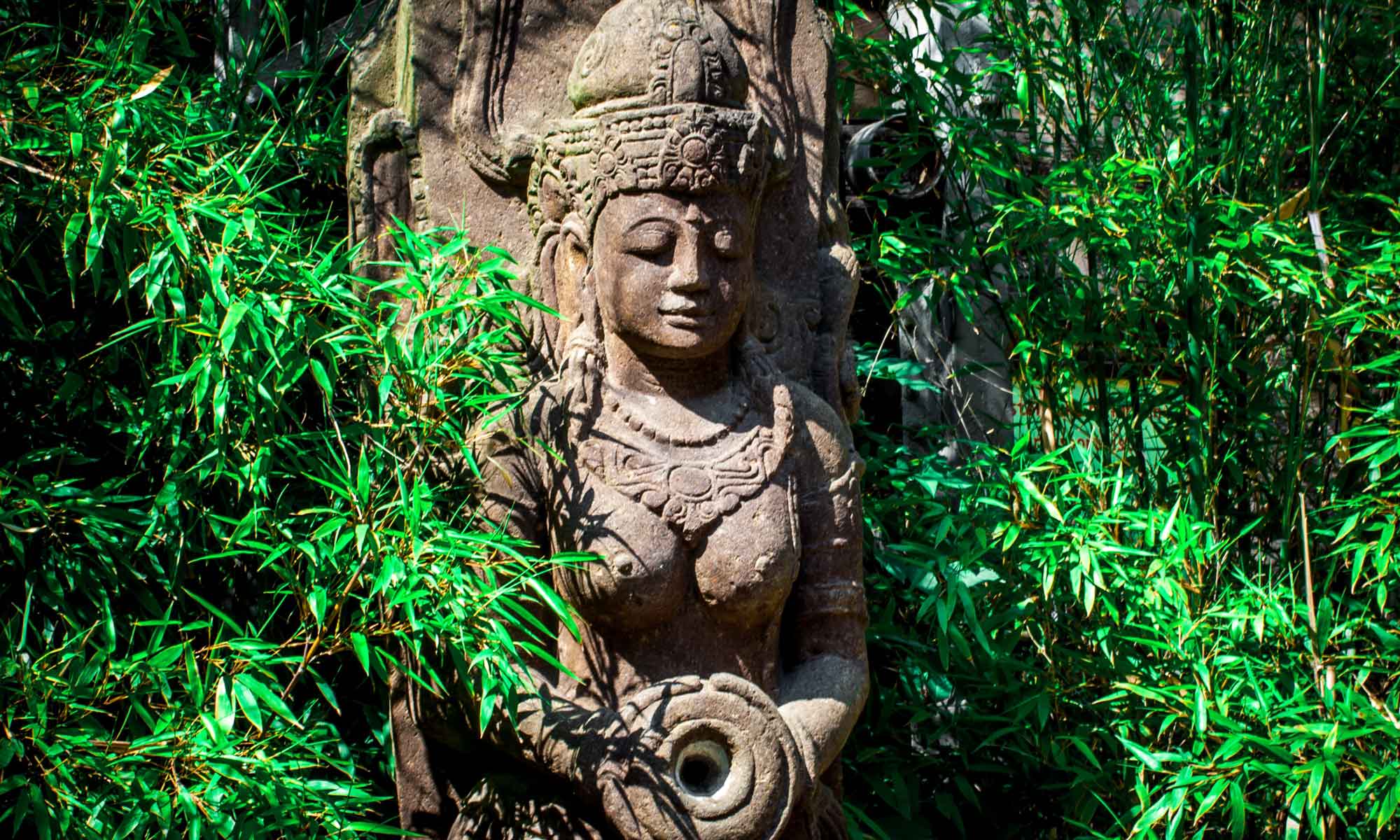
2026 Symposium Presenter: Carla Ionescu

“Where Are the Hundreds? Museum Display, Fragmentation, and the Hidden Magnitude of Goddess Cults

Panel:  Gatekeeping/Safekeeping Material Culture

2026 Online Symposium, May 3 2026

Reimagining Goddess Scholarship:  At the Edges of Sacred Knowledge


Dr. Carla Ionescu is an ancient historian, writer, and educator specializing in Greek religion, material culture, and goddess worship, with a particular focus on Artemis and her cults across the Mediterranean world. She is the founder of the Artemis Mapping Project, an ongoing research initiative documenting sanctuaries, votive deposits, and ritual landscapes associated with Artemis through fieldwork, photography, and digital mapping.

Carla has over a decade of experience teaching ancient history and religious studies at Canadian universities and colleges, alongside a robust public-facing scholarship practice that bridges academic research and wider audiences. Her work frequently examines how modern interpretive frameworks, museum practices, and visual economies shape what survives, what is displayed, and what is forgotten in the study of ancient religion.

She is the author of She Who Hunts: Artemis, the Goddess Who Changed the Worldand She Who Endures: The Cult and Iconography of Artemis of Ephesus. Her current research explores scale, fragmentation, and absence in goddess material culture, with particular attention to how excavation data and museum display diverge. Through lectures, publications, and digital projects, she advocates for approaches that foreground accumulation, loss, and material excess as central to understanding ancient religious experience.

Abstract: “Where Are the Hundreds? Museum Display, Fragmentation, and the Hidden Magnitude of Goddess Cults”

Modern museum displays shape how ancient religions are understood, not only through what they exhibit, but through what they withhold. In the case of goddess cults, particularly those associated with Artemis and related divine figures, the gap between archaeological reality and public presentation is often vast. Excavation reports regularly describe sanctuaries yielding hundreds, sometimes thousands, of votive objects, figurines, statues, and fragments. Yet museum visitors are typically shown only a carefully selected handful. This paper argues that this curatorial narrowing actively gatekeeps material culture by suppressing scale, repetition, and accumulation, which were central to ancient religious experience.

Drawing on case studies from Artemis sanctuaries, including Temple of Artemis Epikritia and the Temple of Artemis at Corfu, this presentation examines how the reduction of hundreds of offerings to a small, aestheticized selection alters interpretation. At Epikritia, excavation reports note the recovery of over five hundred statues and fragments, yet only a few examples circulate in publications or exhibitions. At Corfu, hundreds of votives dedicated to Artemis were uncovered, while modern museum displays present a curated dozen, often detached from their original density and ritual context. The result is a flattened narrative in which goddess worship appears limited, decorative, or marginal, rather than sustained, communal, and materially overwhelming.

The paper contrasts these practices with more recent curatorial approaches, particularly at Museum of the Royal Tombs of Aigai, where scale, fragmentation, and multiplicity are foregrounded rather than concealed. Through reconstructed tomb assemblages, visible storage logic, and the presentation of shards alongside complete objects, the Vergina museum offers visitors a rare encounter with abundance and loss as interpretive tools. This model demonstrates how museums can resist gatekeeping by making absence, damage, and repetition legible rather than invisible.

By focusing on what is not shown, this paper reframes material culture as a site of interpretive control. The suppression of quantity, fragmentation, and redundancy disproportionately affects goddess cults, where meaning was produced through accumulation rather than singular masterpieces. Re-centering magnitude allows us to better understand ancient religious practice and challenges long-standing assumptions about the visibility, importance, and material presence of female divinities in the ancient world.

2026 Symposium Presenter: Judy Grahn

“Spirit Talks to Us, But How Do We Know? Encountering mutual consciousness in tiny forms

Panel: “Dethroning Human Hubris”

2026 Online Symposium, May 3 2026

Reimagining Goddess Scholarship:  At the Edges of Sacred Knowledge”


Judy Grahn, Photo by Irene Young

Judy Grahn is an internationally known poet, author, mythographer, and cultural theorist. Her works include seven books of nonfiction, two book-length poems, five poetry collections, a reader, and a novel. In 2022, her book Eruptions of Inanna: Justice, Gender, and Erotic Power won ASWM’s Sarasvati Award for Best Nonfiction Book. An early Gay activist who walked the first picket of the White House for Gay rights in 1965, she later founded Gay Women’s Liberation and the Women’s Press Collective. Her intention with writing is” to replace obsolete philosophies with better ones.”

“I’ve been trying to locate, experience, and express goddess stories, energies, mysteries since 1972. Coming from an almost completely suppressed tradition has made every opening a wild ride of terror and joy. I’ve written several books on goddess traditions from ancient written sources and from experiencing public rituals for village goddesses in South India. Every part of my life it seems has taught me something about spirit, from my many minor illnesses, to love-making, to poetry, to asking my parents the right questions, to creature encounters. For the 2026 Symposium panel I will draw from my 2023 book, Touching Creatures, Touching Spirit.”

Abstract:  The modern world would have us individuated, living in separated cocoons of self that communicate solely through our sense organs. The existence of psychic sea of energy permeating all beings and enabling nonverbal, nonsensory communication implies that we are part of a community of being. Not separated except to the degree we shut ourselves down and withdraw from the permeating mind and heart vibrations of nature. 

Finding a way into those streams requires taking some steps; while I am by no means an expert in any of this, I have made the attempts and had some successes that I have written about. In my panel presentation and discussion I will draw from these including some methods of freeing myself from the material science I was taught as a young person. One method is understanding how we receive information in three ways, from sensory (body) organs; from cellular (microbial) communication; and from radiant (spiritual) energetic consciousness.

Learn more about Judy’s work on sentience  in her ASWM Scholar Salon:  “Living in a Sentient World.”

“B is for Bat and for Brilliant Judy Grahn” Nan Brooks’ blog post on Judy’s “Living in a Sentient World.”

REGISTER & GET UPDATES HERE


About the Worldwide Indigenous Sciences Network

The Worldwide Indigenous Science Network (WISN) is a 501(c)(3) educational nonprofit dedicated to protecting, revitalizing, and advancing Indigenous knowledge systems through ethical collaboration with Western science. WISN recognizes Indigenous science as a sophisticated, place-based way of knowing that has sustained cultures and ecosystems for millennia and is essential to addressing today’s global environmental and social challenges.

WISN works globally with Indigenous Elders, cultural practitioners, and communities to preserve oral traditions, ceremonial practices, languages, and ecological knowledge that have been marginalized or threatened by colonization. A core focus of the organization is creating respectful, culturally grounded partnerships between Indigenous knowledge holders and researchers, ensuring Indigenous leadership, consent, and sovereignty in all collaborations.

The organization is known for establishing the world’s first advanced degree programs in Indigenous Science and Peace Studies (ISPS), blending Indigenous epistemologies with Western academic frameworks. WISN also supports research and conservation projects connected to sacred sites, culturally significant species, and traditional land stewardship practices.

In addition, WISN facilitates international networking among Indigenous cultural practitioners, provides direct support and resources to communities, and maintains the Credo Mutwa Research Library, a digital archive preserving Indigenous teachings for future generations, which is named for the renowned South African Zulu sangoma, author, healer, and mystic.

Overall, WISN serves as a bridge between knowledge systems, advocating for Indigenous wisdom as vital to planetary well-being and cultural survival.


2026 Symposium Presenter: Monica Mody

“Divinity and Life in Nondual Consciousness: Revisioning Our Relations With More-than-Human Worlds

Panel:  Dethroning Human Hubris

2026 Online Symposium, May 3 2026

Reimagining Goddess Scholarship:  At the Edges of Sacred Knowledge


Dr. Monica Modi

Monica Mody, PhD, MFA, is a cross-genre poet, theorist, and educator working at the intersections of earth-based wisdom, transdisciplinary borderlands thinking, and decolonial frameworks of wholeness. She is the author of the poetry collections Wild Fin (Weavers Press, 2024) and Bright Parallel (Copper Coin, 2023) and the cross-genre Kala Pani (1913 Press, 2013). Academic publications include chapters in edited volumes (Mysticism and the MarginsThe Land Remembers Us: Women, Myth, and Nature); peer-reviewed articles (The Transformative Power of Art JournalIntegral Review: A Transdisciplinary and Transcultural Journal For New Thought, Research, and Praxis), as well as hybrid essays in cross-disciplinary research journals (Tarka Journal). She has presented widely at international and US-based conferences, including at the Parliament of World Religions, Pacifica’s Journey Week Conferences, the Center for Black and Indigenous Praxis (California Institute of Integral Studies), the American Academy of Religion-WR, the Association of Writers and Writing Programs conferences, as well as the Association for the Study of Women and Mythology conferences and symposia. Her poems have appeared in periodicals including Poetry InternationalIndian QuarterlyAlmost IslandBoston Review, and Wasafiri as well as in several anthologies. She is the recipient of awards including the Kore Award for Best Dissertation in Women and Mythology (conferred by the Association for the Study of Women and Mythology), the Sparks Prize Fellowship (Notre Dame), the Zora Neale Hurston Award (Naropa), and the TOTO Award for Creative Writing. Mody is Program Chair and Assistant Professor of Mythological Studies at the Pacifica Graduate Institute. Learn more on Monica’s website

Yogini Vrishanana, 10the century, National Museum Delhi
Abstract:    “Divinity and Life in Nondual Consciousness: Revisioning Our Relations With More-than-Human Worlds”

This presentation builds on frameworks of reality that reveal a relational nondual orientation speaking to a structure of presence where divinity and life course and manifest through non-human worlds. These nondual worldviews can create counternarratives and counterknowledges to patriarchal and colonial metaphysics rooted in a self/other binary, which re-enacts and exonerates disenfranchisement, oppression, and violence registering in both human and more-than-human worlds. I discuss these frameworks and notions of divinity and life in contemplation of the mysteries and teachings encoded by therianthropic yoginis, epistemologies of shakti in gynocentric threads of tantric philosophy, and animistic systems. Through a critical and remythologized engagement, I propose a shift in consciousness that can contribute to expanding precolonial and decolonial genealogies of care, especially as regards our relations with more-than-human worlds.


2026 Symposium Presenter: Apostolia Papadamaki

“Anamnesis: Embodying Ancient Greek Mysticism Through Ceremonial Performances”

Panel: Revitalizing Sacred Ceremony

2026 Online Symposium, May 3 2026

Reimagining Goddess Scholarship:  At the Edges of Sacred Knowledge

Apostolia Papadamaki

Apostolia Papadamaki is a performance artist, ceremonial facilitator, and wisdom keeper working at the intersection of embodied myth, sacred performance, and living Hellenic traditions. She is the founder and artistic director of Anamnesis, a long-term artistic project devoted to ceremonial performance in archaeological sites. For over three decades, she has created site-specific, participatory ritual performances in archaeological sites across Greece, collaborating with professional artists, local communities, women and children to reactivate ancient sacred spaces as fields of embodied remembrance.

Her work is grounded in the ancient Greek concept of Anamnesis, the act of remembering through direct experience rather than intellectual transmission as articulated by Plato. Central to her practice is Orchesis, the ceremonial synthesis of sacred word (logos), music (melos), and embodied movement (kinesis), described by ancient sources as indispensable to ritual life in the ancient Greek world. Through orchesis, myth is approached not as narrative alone, but as a living presence encountered through the body. Apostolia’s performances have taken place in temples, sanctuaries, and museums sacred to Hellenic goddesses and gods. Her creative process weaves together scholarly research, archaeological dialogue, intuitive vision, and dream incubation, often revealing correspondences later confirmed by material evidence and historical sources. These participatory performances unfold as living ceremonies, inviting participants into direct relationship with myth, land, and memory.

Apostolia’s work has been presented internationally in festivals and cultural contexts across Europe,and beyond, supported by major public and cultural institutions. She is also the founder of The Mysteries of Light, a contemporary women’s mystery school rooted exclusively in Hellenic wisdom traditions. Apostolia continues to mentor women worldwide in embodied spiritual practice, mythic remembrance, and ritual art as pathways for re-engaging sacred knowledge in the present.

See Apostolia’s work:  Discover Anamnesis, Site Specific Performances 

Abstract: It is impossible to determine when human beings first began to observe the movements of the sun and moon, the wandering of the planets, or the mysterious phenomena of the natural world. Across ancient civilizations, the rhythms of light and darkness, growth and decay, stirred awe and fear before the vastness of the cosmos.  Among those who gave profound expression to this cosmic awareness were the Ancient Greeks. By observing the rising and setting of the sun, the waxing and waning of the moon, and the cycles of season they developed ceremonies and rituals so they can understand and to unite with nature, with the cosmos, and with the Divine. 

Long before classical Greek civilization, the ancestors of the Greeks inhabited the same land and their lineage remains rooted in this same landscape to this day. Within this living continuum emerged the Orphic tradition, centered on Orpheus, regarded as the first theologian of ancient Greece. The Orphics articulated profound visions of cosmos, nature, and the Divine, not as abstract theory, but as initiatory knowledge to be lived.  From these teachings arose the rituals and mysteries of ancient Greece: sacred practices offering human beings the inner means to unite with the All, to transcend the fear of death, and to pursue a life of virtue. 

Today, the question becomes: how might this initiatory knowledge be embodied in our time? 

This presentation explores Anamnesis as an embodied methodology through which Ancient Greek mysticism may be lived in the present. Drawing on the Platonic understanding of ἀνάμνησις as recollection through direct experience, as articulated by Plato, I approach sacred knowledge not as historical content to be reconstructed, but as presence to be embodied.  For over three decades, I have created site-specific, participatory ceremonial performances in archaeological spaces across Greece. These works do not attempt to replicate ancient rites. Rather, they cultivate conditions in which embodied remembrance may arise.