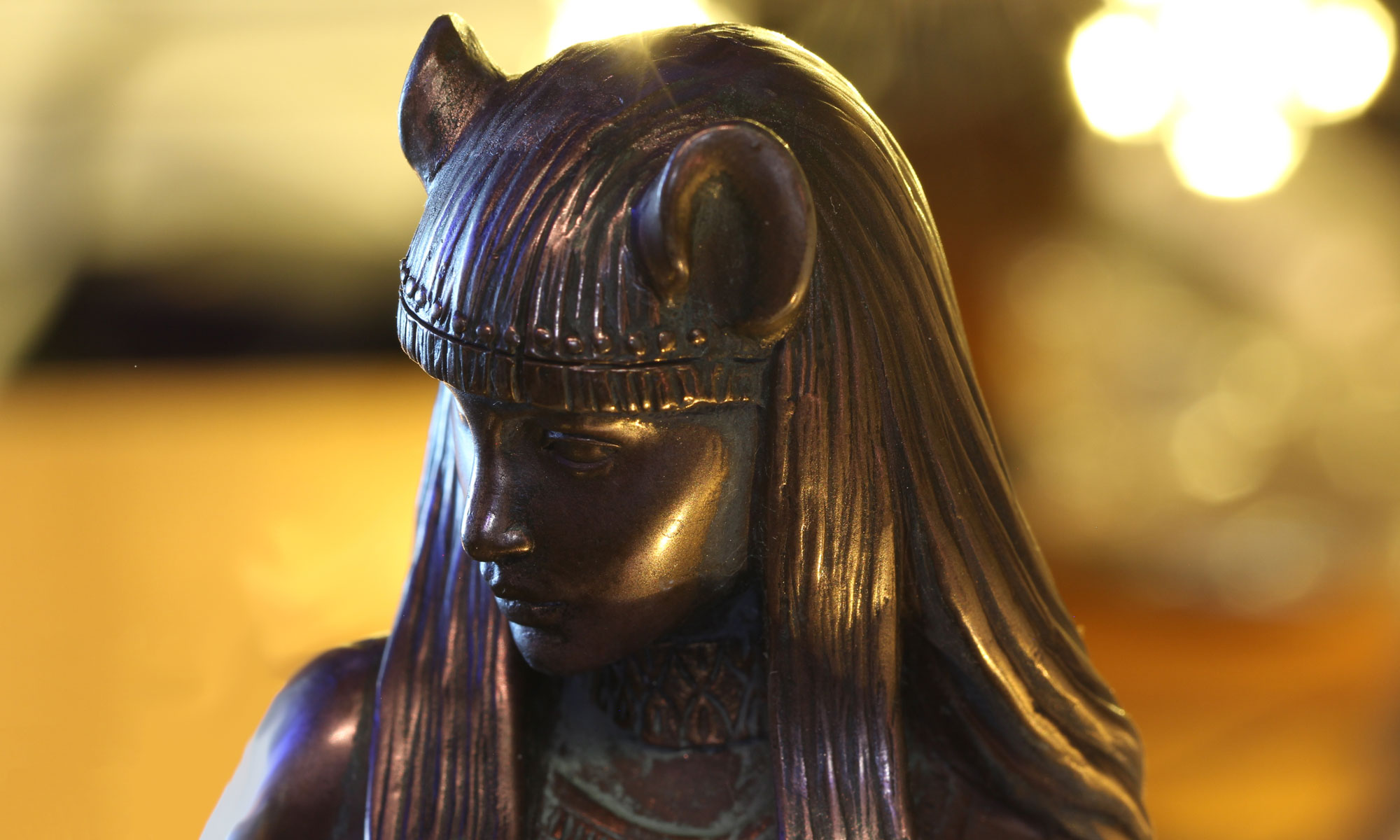

Announcing Scholar Salon 95: Register for Februrary 19
“Let the Ancient Gods and Goddesses Organize Your Year“
with Dr.Normandi Ellis
Thursday, February 19, 2026 at 3:00 PM Eastern Time
REGISTER HERE

Across the ancient world, the Seven Sacred Planets were understood not as distant spheres of rock and gas, but as living intelligences—cosmic powers shaping destiny, consciousness, and your unfolding of life. The five visible planets and the sun and moon ruled each day of the week. Used correctly, they provide inspiration for effectively engaging in our life tasks, performing the important activities of life at the right time. Not a HUGE astrological teaching, this talk will offer a simple way to look at and organize your daily/yearly calendar based on the intelligences of the planets.
Be sure to bring your planner and calendar to the talk!

Dr. Normandi Ellis is an ordained clairvoyant Spiritualist minister and priestess of Isis. She is also an astrologer, numerologist, and teacher of metaphysics in a number of venues online and in person. Her books include Awakening Osiris: The Egyptian Book of the Dead, The Union of Isis an Thoth: Magic and Initiatory Practices of Ancient Egypt, Hieroglypic Words of Power, and The Ancient Tradition of Angels. She leads trips to Egypt and trains other priestesses of Isis through her lyceum, Per Ankh Het Seshet. Normandi has been a member of ASWM’s Advisory Board since the beginning of our work. Visit her website for more information on her trips and teachings.
~~~~~~~~~~~~~~~~~~~~~~~~~~~~
Upcoming Scholar Salons (3pm Eastern Time):
Thursday March 5, with Dr. Carla Ionescu:

This Salon recording will also be available to members when processed after the event.
2026 Online Symposium: “Reimagining Goddess Scholarship: At the Edges of Sacred Knowledge”
Reimagining Goddess Scholarship: At the Edges of Sacred Knowledge
Sunday, May 3 2026

Return to this main page as additional information is added.
This symposium is a conversation that focuses closely on the question of “Who holds/gives voice to sacred knowledge?” A spacious schedule allows us to create dialogues among speakers and members. Our program features three panels on issues that we are often asked to consider. In this online format we are able to feature panelists from a wide range of disciplines and locations. Our featured speaker, Dr. Apela Colorado, Director of the Worldwide Indigenous Sciences Network, will respond to panelists’ work, adding important context and exploring the spaces between Western and Indigenous knowledge.
Panel 1: Gatekeeping Material Culture
Panel 2: Revitalizing Sacred Ceremony
Panel 3: Dethroning Human Hubris
Registration is now open for Members and Nonmembers. Because of the focus of this year’s program, we also have a special category for International Nonmembers who are just learning about ASWM.
Note: For those in need, a discount offer will appear on the MEMBER and INTERNATIONAL registration forms, after clicking the REGISTRATION FEES box.
We are grateful to Métis artist Leah Marie Dorion for sharing her artwork “Passing Water Forward” for our ASWM event. Leah is a Métis writer and artist currently living near Prince Albert, Saskatchewan, Canada. Her artwork celebrates the strength and resilience of Indigenous women and families. She has also authored books forMétis children and illustrated other books on Métis culture. See more about Leah and her work here.
Scholar Salon 93 (Recording now available)
Announcing Scholar Salon 94: Register for January 22
“Women of Ancient Western Asia and (Questioning) Their Stereotypes“
with Dr. Pinar Durgun
Thursday, January 22, 2026 at 3:00 PM Eastern Time
REGISTER HERE

Modern perceptions of women in ancient Mesopotamia (or ancient Western Asia) are often shaped by persistent stereotypes: that women were universally oppressed, legally invisible, and confined to domestic or sexualized roles. This talk explores how our understanding of ancient women’s lives shifts when we challenge these assumptions and examine evidence across legal, economic, religious, and visual sources. Each category of evidence carries its own biases, privileging certain narratives while silencing others.

While patriarchal structures shaped Mesopotamian society and law codes emphasized control and restriction, other sources reveal women owning and managing property, participating in economic transactions, and holding significant religious offices within temple and palace institutions. Rather than seeking a single “status of women” in Mesopotamia, this presentation highlights the variety of lived experiences shaped by class, historical period, and institutional context. By bringing these fragmented forms of evidence into conversation, the talk invites us to reconsider not only women in the ancient world, but also how women’s histories are constructed, obscured, and reclaimed through material culture and its study.

Dr. Pinar Durgun is an art-historically trained archaeologist with a strong background in anthropology. She has a Ph.D. in Archaeology and the Ancient World from Brown University’s Joukowsky institute for Archaeology and the Ancient World. Her interests center around death and burial, image and identity making, materials and making in the ancient world. Her current research focuses on seals and seal making, and copies and copying in ancient Western Asia. With fifteen years of experience teaching and working in museums, Dr. Durgun is interested in how museums help us engage with the past and how they can better serve our communities today. She is currently the Jeannette and Jonathan Rosen Associate Curator and Department Head of Ancient Western Asian Seals and Tablets Department at the Morgan Library and Museum in New York City.
~~~~~~~~~~~~~~~~~~~~~~~~~~~~
Upcoming Scholar Salons (3pm Eastern Time):
Thursday February 5, with Dr. Joan Marler, Topic: the legacy of Marija Gimbutas
This Salon recording will also be available to members when processed after the event.
You must be logged in to post a comment.