We have now opened registration for the 2018 conference!
Early bird rates apply until Feb. 2, 2018.
Register and renew membership.
See you in March!

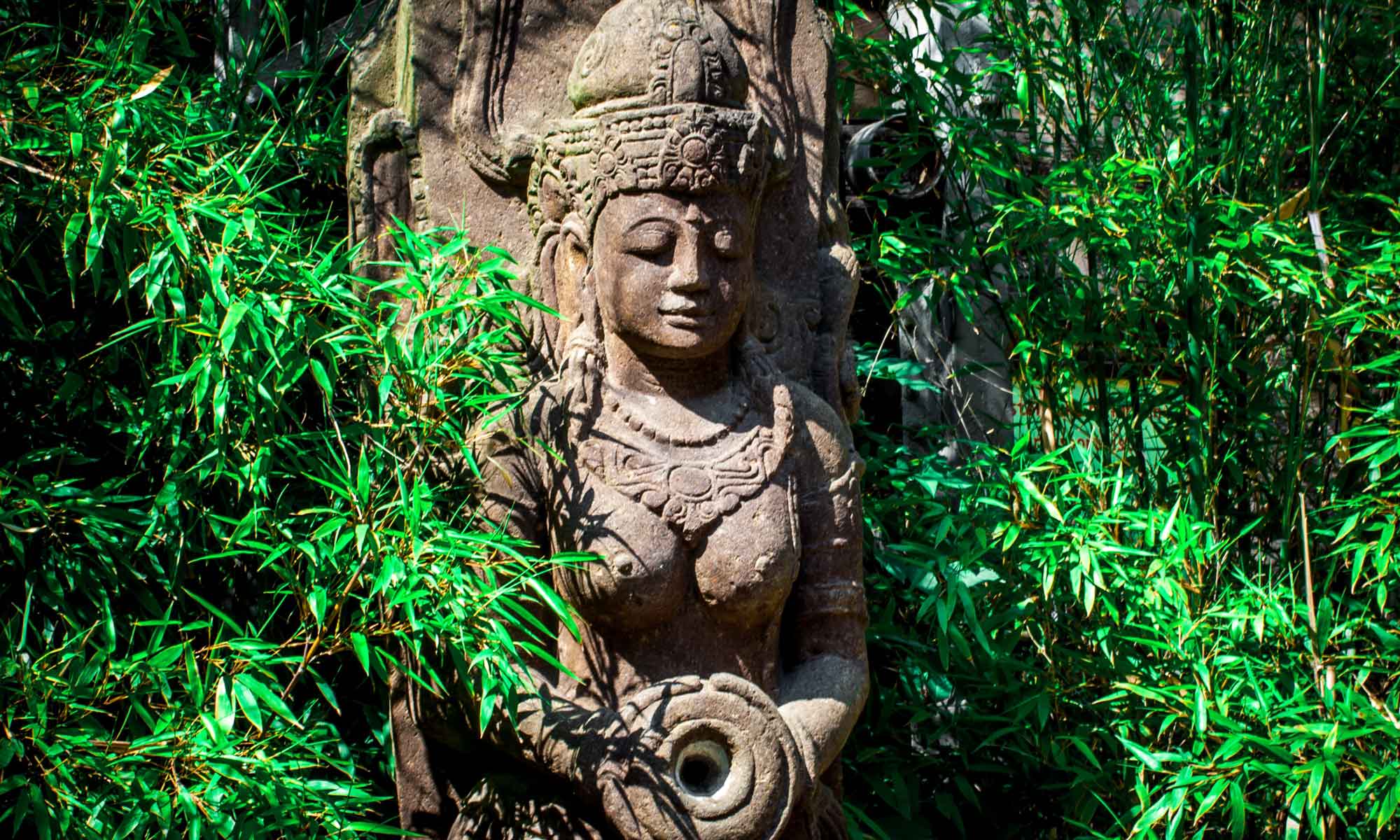

The Association for the Study of Women and Mythology

ASWM is pleased to again work with the US Modern Matriarchal Studies group, who will offer a day of presentations following our conference in Las Vegas. Stay for this exciting program!
Modern Matriarchal Studies is the “investigation and presentation of non-patriarchal societies”, and matriarchies as “non-hierarchical, horizontal societies of matrilineal kinship”, effectively defining matriarchy as “non-patriarchic matrilineal societies”. Matriarchy is characterized by the sharing of power equally between the two genders, an egalirarian model. Heide Göttner-Abendroth
Please note: Matriarchal Studies Day is presented in conjunction with ASWM’s conference, to the benefit of both groups, but registration for this event is not covered by registering for the ASWM Conference. Register here for Matriarchal Studies Day:
Early bird registration–on or before Feb. 2 2018 $60
Slightly later birds–Feb. 3 to March 9, 2018 $75
Late birds and walk-ins–March 10-18, 2018 $90
For more information contact Joan Cichon
GOLD COAST HOTEL, LAS VEGAS NV
ESTIMATED ROOM RATE PLUS TAXES AND MANDATORY RESORT FEE
| Thursday 3/15/18 | Friday
3-16-18 |
Saturday
3-17-18 |
Sunday
3-18-19 |
||
| Deluxe Room Rates | 40.00 | 89.00 | 89.00 | 40.00 | |
| Tax 13.35% | 5.35 | 11.88 | 11.88 | 5.35 | |
| Resort fee (17.99) inclusive of taxes | 20.40
$65.75 |
20.40 $121.28 |
20.40 $121.28 |
20.40 $65.75 |
=$374.06 for a four night stay. |
Please be advised that there is also a mandatory refundable security/damage deposit of $100 required at check-in.
On line reservations can be made via our group link: ASWM Gold Coast Group Link This page will ask for the Group Reservation ID or Group Code: A8WMC03.
You may also book by phone by calling central reservations toll free at 888-402-6278. They will need to reference this same ID: A8WMC03, to receive your special, discounted room rates.
Our special rates will be available from Wednesday 3/14 through Monday 3/19, 2018.
Hotel reservation cut off is February 13, 2018.

“The roles of the horse within human cultures are complex and context driven. Horses may be domesticates whose bodies are eaten or used as products. They may be workers, drafted and indoctrinated into human endeavors and utilized for their strength, speed and power to human advantage. They may serve as metaphors and symbolic proxies for human or cosmic properties. Present-day Euro-American scholarly agendas primarily focus upon these human-generated concepts and in doing so view horses merely as objects or sets that are used by humans.
This misses the point that horses are large and potentially dangerous creatures to whom riders entrust their lives. The relationship between horse and rider is necessarily based upon the subjective experience of two social beings sharing space, time and experiences.
In this presentation I detail how horses are conveyed as companions and allies across Eurasia through historical narratives, oral traditions and archaeology. I cover the mutual devotion of Alexander the Great and Cyrus to their warhorses, Persian and Kyrgyz epic poetry detailing the exploits of heroes and their named hero-horses, and archaeological evidence of care in human-horse co-burials. I argue that these individuals and communities saw horses as partners, and recognized their agency by attributing intentionality and significance to their actions.”
Gala Argent is an interdisciplinary scholar and lifelong equestrienne whose work concerns the relational ways humans and other animals come together. She holds a Ph.D. in archaeology, MA and BA degrees in (human) communication studies, and teaches or has taught in higher education departments of art, communication studies, anthropology and animal studies. Her current interests focus on theorizing human-horse interactions and relationships using models of nonverbal and interpersonal communication, and on the ways in which humans and other animals come together in relational, corporeal, temporal and spatial ways to co-create mutually interdependent selves and societies.

The Sarasvati Book Award solicits nonfiction books published during 2015-2017 in the field of goddess studies/women and mythology. Named for the Hindu goddess of learning and the creative arts, the Sarasvati award from the Association for the Study of Women and Mythology (ASWM) honors creative work in the field of goddess and mythology studies. The award will be presented during ASWM’s biennial conference, Las Vegas, Nevada, 16-17 March 2018. Book submissions must be received by ASWM Sarasvati Award committee no later than 15 November 2017. Books must be submitted by publishers only. Anthologies and self-published books are not eligible for this award.
The 2017 deadline for submissions has now passed. Past winners of this prestigious award for the study of women and mythology include:
See the link for submission form.
You must be logged in to post a comment.