Announcing Scholar Salon 99: Register for July 9

“Looking for the Hidden Folk: How Iceland’s Elves Can Save the Earth “

with Nancy Marie Brown

Thursday,  July 9, 2026 at 3 PM Eastern Time  

REGISTER HERE


Iceland by Nancy Marie Brown

In the summer of 2016, on her 21st trip to Iceland, author Nancy Marie Brown took a walk with an elf-seer: Ragnhildur Jonsdottir. 

“We walked in a lava field she and her elf friends had protected from destruction when a new road was built nearby,” Brown writes in her book Looking for the Hidden Folk. “We didn’t talk much about elves or the Hidden Folk as we walked. Instead, we photographed lava crags and stacks and pillars, pillows of silver-green moss, caves and clefts and individual lichen-splashed rocks. We wandered about pointing out plants. We talked about art and inspiration. What is inspiration? Why do some places attract artists and spark creative thought? Why are some places beautiful—and how do you define beauty? And we shared an experience I still can’t explain. Said Ragnhildur, as we left the lava field, ‘Now do you believe in elves?’”

 Reflecting on her own encounters with Iceland’s Otherworld, Brown reveals how the stories we tell shape the world we see. She argues that our beliefs about the Earth will preserve, or destroy, it. In this time of climate crisis, Iceland and its elf lore suggest a different way of thinking about the Earth, one that offers hope. Author of nine highly praised books about Iceland and the Viking Age, Brown “makes a strong case for everyday wonder,” says the New York Times.


Nancy Marie Browh by Eyja Film

Nancy Marie Brown is the author of Looking for the Hidden Folk, The Far Traveler, Song of the Vikings, Ivory Vikings, The Real Valkyrie, and other highly praised books of nonfiction. As a writer she asks, What have we overlooked? Whose stories must not be forgotten? For twenty years, she worked as a university science writer and editor; now she writes from a farm in the Northeast Kingdom of Vermont. Icelandic horses graze outside her window, and every summer she travels to Iceland in search of inspiration.

 ~~~~~~~~~~~~~~~~~~~~~~~~~~~~

Upcoming Summer Salon

Scholar Salon 100

Thursday, July 23, 2026 at 12 NOON Eastern Time

“Living Goddess Traditions in Land Salzburg and the Salzkammergut”

with Krista Rodin

Benefit of Membership - ASWM

This Salon recording will also be available to members when processed after the event. 


Announcing Scholar Salon 98: Register for June 25

“Zoroastrian Mythologies of Women Angels “

with Feroza Jussawalla

Thursday,  June 25, 2026 at 12 NOON Eastern Time  

REGISTER HERE


Sasanian Vessel depicting Anahita, goddess of waters

Zoroastrianism, especially as practiced by the Parsis of India, is indeed the first religion to recognize the importance of both of women’s equality. And of not polluting the environment.

Zoroastrianism is perhaps the world’s oldest religion dating back to almost 4,000 BCE. Zoroastrianism flourished in what is now Iran, until the Arab conquerors came in the 6th CE, and converted to and imposed Islam on the Persian peoples. Persian women were independent, warriors, workers and Queens.

Zoroastrianism reveres the waters, the earth, the moon and stars, and has angels assigned to the protection of each as well as angels of every gender delegated with the task of caring for these parts of the universe. Avan, the angel designated to care for the waters, asks us not to pollute waters, oceans, rivers, streams, and wells. Similarly, there is a female Yazata presiding over the earth. They are equal with the male Yazatas, such Tir Yazad who controls the rains and the stars, and those like Behram Ijad, the protective spirit, immortalized as the great warrior in The Rubaiyat of Omar Khhayyam.

A protective female Parsi Angel

From its very beginnings, Zoroastrianism advocated the equality of all genders. When Zoroastrians were compelled to move to India, they also took on the Indian strictures that honored the rivers, such as Mother Ganga and the female goddesses equal in strength and importance, from the Hindu religion. When they fled the Arab persecution and arrived in India they promised  to mix with the South Asian Indian peoples like “milk mixes with sugar,” Zoroastrianism, embodies the spirit co-operation, across all faiths, countries and religions, as also the idea of peace: “swords into ploughshares.”

Dr. Feroza Jussawalla

Dr. Feroza Jussawalla is Professor Emerita at the University of New Mexico in Albuquerque. Her recent work in women’s studies includes, Emerging South Asian Women’s Writing, (Peter Lang, 2017), Memory, Voice and Identity: Muslim Women’s Writing from Across the Middle East, (Routledge, 2020), Muslim Women’s Writing from South and South East Asia, (Routledge, 2021). Her collection of poems, Chiffon Saris (2002) was published by Kolkotta, Writer’s Workshop and Toronto South of Asian Review.

 ~~~~~~~~~~~~~~~~~~~~~~~~~~~~

Upcoming Summer Salons

Scholar Salon 99: 

Thursday, July 9, 2026  3:00 PM Eastern Time

“Looking for the Hidden Folk: How Iceland’s Elves Can Save the Earth”

with Nancy Marie Brown

 ~~~~~~~~~~~~~~

Scholar Salon 100:

Thursday, July 23, 2026 at 12 NOON Eastern Time

“Living Goddess Traditions in Land Salzburg and the Salzkammergut”

with Krista Rodin

Benefit of Membership - ASWM

This Salon recording will also be available to members when processed after the event. 


Announcing Scholar Salon 97: Register for March 19

“Rewriting Human Strength: What Female Biology Reveals About Survival, Performance, and Power”

with Starre Vartan

Thursday,  March 19, 2026 at 3:00 PM Eastern Time  

REGISTER HERE


Angarag, the five year old Mongolian Horse Archer (2021)

For centuries, we’ve been told a simple story: men are strong, women are weak. It’s a myth so deeply embedded in modern culture that it often feels like biological fact. But when we look closely at the science, that story begins to unravel. Yes, male bodies tend to excel at generating short bursts of upper-body power. But strength is far more complex than how much weight someone can bench press. When we expand our definition beyond visible muscle mass, a very different picture emerges—one grounded in physiology, evolution, and endurance.

The female body has remained remarkably consistent in its core design for tens of thousands of years. Across that time, it evolved not merely to reproduce, but to survive environmental stress, food scarcity, infection, migration, and physical strain. The result is a body built for durability.

Women mount faster and more robust immune responses to many pathogens. Female metabolism is metabolically flexible, allowing for more efficient fat utilization during sustained effort and greater protection during caloric stress. Women often demonstrate superior fatigue resistance and recovery in endurance contexts. Even heightened perceptual sensitivity—long dismissed as weakness—reflects neurological responsiveness that enhances environmental awareness and social cohesion.

This talk reframes strength as a multidimensional biological reality rather than a single performance metric. Drawing from evolutionary biology, physiology, and contemporary research, it reveals the adaptive advantages embedded in female bodies.  When we redefine strength, we don’t just update the science—we challenge a cultural narrative that has shaped medicine, sport, and social norms for generations—and how we understand history.

Starre Vartan

Starre Vartan writes about health & science, the natural world, and the female body—especially the parts that are strong, misunderstood, or totally ignored. Her science journalism and investigative reporting has been published in National Geographic, Scientific American, Slate, The Washington Post, Undark, New Scientist, and other outlets where curiosity—and research rigor—are job requirements. She’s also published essays in Aeon’s Psyche, Candidly, and in her newsletter, Palimpsest of Flesh, as well as short fiction.

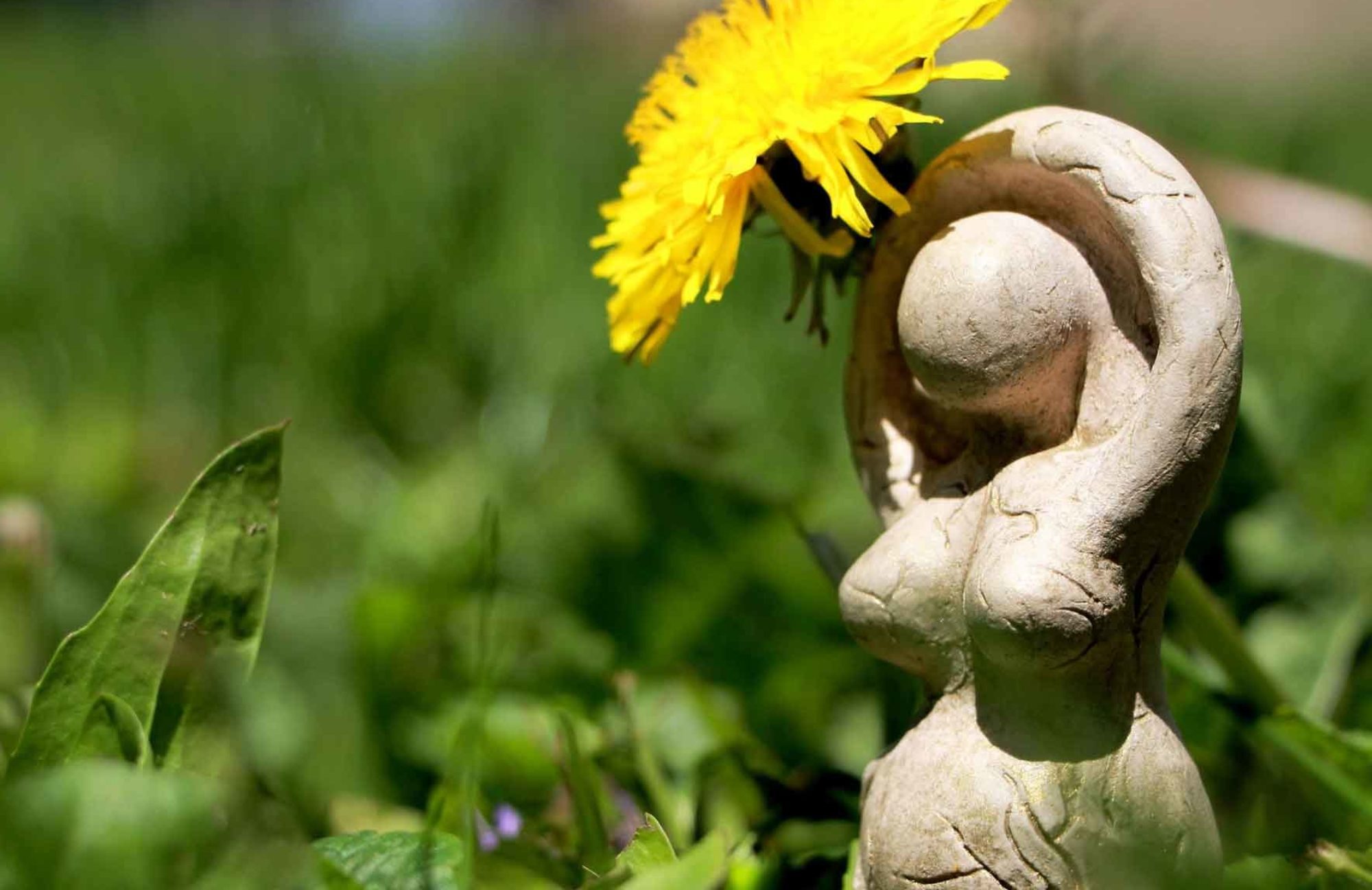
Her second book, The Stronger Sex: What Science Tells Us About the Power of the Female Body (Seal Press/Hachette, July 2025), has been published in the US & Canada, the United Kingdom, Australia, New Zealand, and is forthcoming in China and Korea. It is a science-backed, myth-busting love letter to the female body—an exploration of the female body’s sensitivity, endurance, immunity, longevity, and more. In addition to her science writing, Starre is a 5Rhythms and ecstatic dancer, trailrunner and weightlifter, and a ceramicist of surrealist female goddesses. She splits her time between the Pacific Northwest of the U.S. and the Illawarra Coast south of Sydney, Australia, and grew up in New York. A dual citizen of the US and Australia, Starre has a Bachelors of Science in Geology from Syracuse University and a Master of Fine Arts in Writing from Columbia University. 

 ~~~~~~~~~~~~~~~~~~~~~~~~~~~~

Watch our newsletter for updated Salon announcements.

Benefit of Membership - ASWM

This Salon recording will also be available to members when processed after the event. 


Announcing Scholar Salon 96: Register for March 5

“She Who Endures: Power, Politics, and the Iconography of Artemis of Ephesus”

with Dr. Carla Ionescu

Thursday,  March 5, 2026 at 3:00 PM Eastern Time  

REGISTER HERE


Artemis of Ephesus, 2nd century AD

In her latest book, She Who Endures: The Cult and Iconography of Artemis of Ephesus, Dr. Carla Ionescu reexamines one of the most misunderstood divine figures of the ancient Mediterranean. Far from being a regional curiosity or an anomaly within Greek religion, Artemis of Ephesus was a powerful, adaptive, and politically embedded goddess whose cult shaped civic identity, imperial diplomacy, and religious imagination for centuries.

This lecture explores how the Ephesian Artemis functioned simultaneously as city protectress, cosmic sovereign, and sacred embodiment of continuity. Drawing on archaeological evidence, temple dedications, imperial coinage, inscriptions, and sculptural programs, the talk traces how her distinctive iconography emerged and evolved across Archaic, Hellenistic, and Roman contexts. Particular attention will be given to the famous cult statue type and the symbolic language embedded in its form, including animal imagery, cosmic references, and ritual ornamentation.

Rather than treating Artemis of Ephesus as a deviation from the “Greek” Artemis, this presentation argues for theological continuity across her manifestations. The Ephesian goddess reveals how local tradition, Anatolian religious heritage, and Greek cult practice intertwined to produce a form of sacred authority that endured political change, imperial control, and shifting religious landscapes.

By examining the material record alongside literary testimony and civic history, this lecture invites us to reconsider how ancient communities constructed divine power, and how modern scholarship has often constrained it. Artemis of Ephesus did not simply survive history. She shaped it.

Dr. Carla Ionescu is an ancient historian and author specializing in Greek religion and Mediterranean cult traditions. She has taught at several Canadian universities and colleges, bringing over a decade of experience in both in-person and online instruction. Her research focuses on the material culture, sanctuaries, and evolving iconography of Artemis across the Mediterranean world. She is the author of She Who Hunts: Artemis, the Goddess Who Changed the World (2022) and She Who Endures: The Cult and Iconography of Artemis of Ephesus (2025). Her work combines archaeological evidence, inscriptions, literary sources, and site-based research to reconstruct how Artemis functioned within civic, political, and ritual life from the Archaic period through Late Antiquity.

Dr. Ionescu is also the founder of the Artemis Mapping Project, an ongoing digital initiative documenting sanctuaries and dedications to Artemis across the Mediterranean, Balkans, and Near East. Through public lectures, workshops, and field research, she works to make ancient material culture accessible to both academic and public audiences. Her current projects explore Artemis in relation to mountain traditions, animal sovereignty, and the broader religious networks of the ancient world.


~~~~~~~~~~~~~~~~~~~~~~~~~~~~

Watch our newsletter for updated Salon announcements.

Benefit of Membership - ASWM

This Salon recording will also be available to members when processed after the event. 


Announcing Scholar Salon 95: Register for Februrary 19

Let the Ancient Gods and Goddesses Organize Your Year

with Dr. Normandi Ellis

Thursday,  February 19, 2026 at 3:00 PM Eastern Time  

REGISTER HERE


Dr. Normandi Ellis at Alexandria

Across the ancient world, the Seven Sacred Planets were understood not as distant spheres of rock and gas, but as living intelligences—cosmic powers shaping destiny, consciousness, and your unfolding of life.  The five visible planets and the sun and moon ruled each day of the week. Used correctly, they provide inspiration for effectively engaging in our life tasks, performing the important activities of life at the right time. Not a HUGE astrological teaching, this talk will offer a simple way to look at and organize your daily/yearly calendar based on the intelligences of the planets.

Be sure to bring your planner and calendar to the talk!

Dr. Normandi Ellis

Dr. Normandi Ellis is an ordained clairvoyant Spiritualist minister and priestess of Isis. She is also an astrologer, numerologist, and teacher of metaphysics in a number of venues online and in person. Her books include Awakening Osiris: The Egyptian Book of the Dead, The Union of Isis an Thoth: Magic and Initiatory Practices of Ancient Egypt, Hieroglypic Words of Power, and The Ancient Tradition of Angels. She leads trips to Egypt and trains other priestesses of Isis through her lyceum, Per Ankh Het Seshet. Normandi has been a member of ASWM’s Advisory Board since the beginning of our work. Visit her website for  more information on her trips and teachings.

~~~~~~~~~~~~~~~~~~~~~~~~~~~~

Upcoming Scholar Salons (3pm Eastern Time):

Thursday March 5, with Dr. Carla Ionescu: She Who Endures: The Cult and Iconography of Artemis of Ephesus

Benefit of Membership - ASWM

This Salon recording will also be available to members when processed after the event.