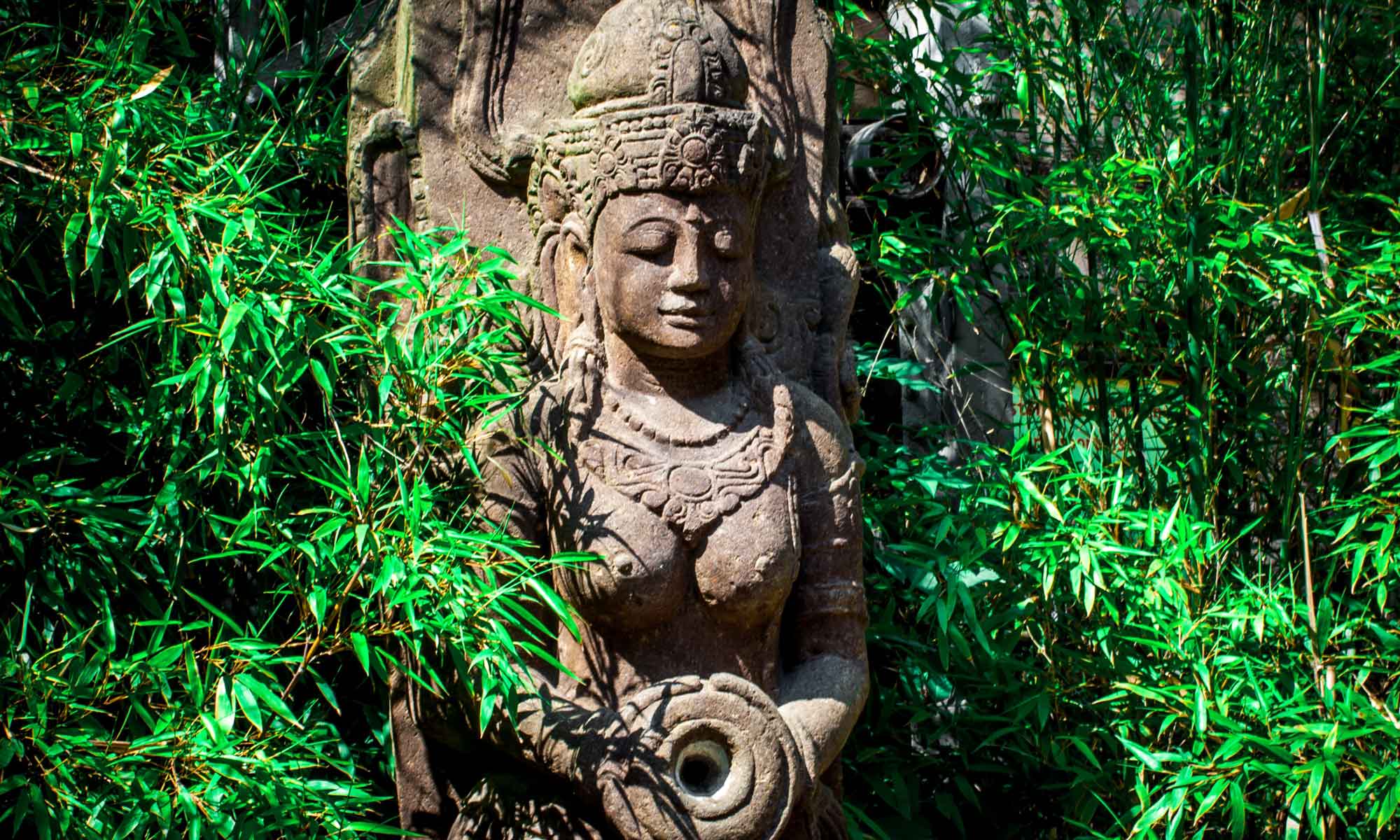
Announcing Scholar Salon 96: Register for March 5

“She Who Endures: Power, Politics, and the Iconography of Artemis of Ephesus”

with Dr. Carla Ionescu

Thursday,  March 5, 2026 at 3:00 PM Eastern Time  

REGISTER HERE


Artemis of Ephesus, 2nd century AD

In her latest book, She Who Endures: The Cult and Iconography of Artemis of Ephesus, Dr. Carla Ionescu reexamines one of the most misunderstood divine figures of the ancient Mediterranean. Far from being a regional curiosity or an anomaly within Greek religion, Artemis of Ephesus was a powerful, adaptive, and politically embedded goddess whose cult shaped civic identity, imperial diplomacy, and religious imagination for centuries.

This lecture explores how the Ephesian Artemis functioned simultaneously as city protectress, cosmic sovereign, and sacred embodiment of continuity. Drawing on archaeological evidence, temple dedications, imperial coinage, inscriptions, and sculptural programs, the talk traces how her distinctive iconography emerged and evolved across Archaic, Hellenistic, and Roman contexts. Particular attention will be given to the famous cult statue type and the symbolic language embedded in its form, including animal imagery, cosmic references, and ritual ornamentation.

Rather than treating Artemis of Ephesus as a deviation from the “Greek” Artemis, this presentation argues for theological continuity across her manifestations. The Ephesian goddess reveals how local tradition, Anatolian religious heritage, and Greek cult practice intertwined to produce a form of sacred authority that endured political change, imperial control, and shifting religious landscapes.

By examining the material record alongside literary testimony and civic history, this lecture invites us to reconsider how ancient communities constructed divine power, and how modern scholarship has often constrained it. Artemis of Ephesus did not simply survive history. She shaped it.

Dr. Carla Ionescu is an ancient historian and author specializing in Greek religion and Mediterranean cult traditions. She has taught at several Canadian universities and colleges, bringing over a decade of experience in both in-person and online instruction. Her research focuses on the material culture, sanctuaries, and evolving iconography of Artemis across the Mediterranean world. She is the author of She Who Hunts: Artemis, the Goddess Who Changed the World (2022) and She Who Endures: The Cult and Iconography of Artemis of Ephesus (2025). Her work combines archaeological evidence, inscriptions, literary sources, and site-based research to reconstruct how Artemis functioned within civic, political, and ritual life from the Archaic period through Late Antiquity.

Dr. Ionescu is also the founder of the Artemis Mapping Project, an ongoing digital initiative documenting sanctuaries and dedications to Artemis across the Mediterranean, Balkans, and Near East. Through public lectures, workshops, and field research, she works to make ancient material culture accessible to both academic and public audiences. Her current projects explore Artemis in relation to mountain traditions, animal sovereignty, and the broader religious networks of the ancient world.


~~~~~~~~~~~~~~~~~~~~~~~~~~~~

Watch our newsletter for updated Salon announcements.

Benefit of Membership - ASWM

This Salon recording will also be available to members when processed after the event. 


Announcing Scholar Salon 95: Register for Februrary 19

Let the Ancient Gods and Goddesses Organize Your Year

with Dr. Normandi Ellis

Thursday,  February 19, 2026 at 3:00 PM Eastern Time  

REGISTER HERE


Dr. Normandi Ellis at Alexandria

Across the ancient world, the Seven Sacred Planets were understood not as distant spheres of rock and gas, but as living intelligences—cosmic powers shaping destiny, consciousness, and your unfolding of life.  The five visible planets and the sun and moon ruled each day of the week. Used correctly, they provide inspiration for effectively engaging in our life tasks, performing the important activities of life at the right time. Not a HUGE astrological teaching, this talk will offer a simple way to look at and organize your daily/yearly calendar based on the intelligences of the planets.

Be sure to bring your planner and calendar to the talk!

Dr. Normandi Ellis

Dr. Normandi Ellis is an ordained clairvoyant Spiritualist minister and priestess of Isis. She is also an astrologer, numerologist, and teacher of metaphysics in a number of venues online and in person. Her books include Awakening Osiris: The Egyptian Book of the Dead, The Union of Isis an Thoth: Magic and Initiatory Practices of Ancient Egypt, Hieroglypic Words of Power, and The Ancient Tradition of Angels. She leads trips to Egypt and trains other priestesses of Isis through her lyceum, Per Ankh Het Seshet. Normandi has been a member of ASWM’s Advisory Board since the beginning of our work. Visit her website for  more information on her trips and teachings.

~~~~~~~~~~~~~~~~~~~~~~~~~~~~

Upcoming Scholar Salons (3pm Eastern Time):

Thursday March 5, with Dr. Carla Ionescu: She Who Endures: The Cult and Iconography of Artemis of Ephesus

Benefit of Membership - ASWM

This Salon recording will also be available to members when processed after the event. 


Announcing Scholar Salon 94: Register for January 22

Women of Ancient Western Asia and (Questioning) Their Stereotypes

with Dr. Pinar Durgun

Thursday,  January 22, 2026 at 3:00 PM Eastern Time  

REGISTER HERE

Statuette of a Woman, “Lady with the Aryballos”, about 2200 – 2000 B.C., Akkadian or Neo-Sumerian, painted alabaster. Musée du Louvre, Département des Antiquités orientales. Image © Musée du Louvre, dist. RMN-Grand Palais / Thierry Ollivier / Art Resource, NY.

Modern perceptions of women in ancient Mesopotamia (or ancient Western Asia) are often shaped by persistent stereotypes: that women were universally oppressed, legally invisible, and confined to domestic or sexualized roles. This talk explores how our understanding of ancient women’s lives shifts when we challenge these assumptions and examine evidence across legal, economic, religious, and visual sources. Each category of evidence carries its own biases, privileging certain narratives while silencing others.

Carnelian cylinder seal (and modern impression) with mother and child attended by women, Akkadian period (ca. 2334–2154 BC), from Ur (modern Tell el-Muqayyar, Iraq). PG 871. Image © Courtesy of University of Pennsylvania Museum of Archaeology and Anthropology.

While patriarchal structures shaped Mesopotamian society and law codes emphasized control and restriction, other sources reveal women owning and managing property, participating in economic transactions, and holding significant religious offices within temple and palace institutions. Rather than seeking a single “status of women” in Mesopotamia, this presentation highlights the variety of lived experiences shaped by class, historical period, and institutional context. By bringing these fragmented forms of evidence into conversation, the talk invites us to reconsider not only women in the ancient world, but also how women’s histories are constructed, obscured, and reclaimed through material culture and its study.

Dr. Pinar Durgun

Dr. Pinar Durgun is an art-historically trained archaeologist with a strong background in anthropology. She has a Ph.D. in Archaeology and the Ancient World from Brown University’s Joukowsky institute for Archaeology and the Ancient World. Her interests center around death and burial, image and identity making, materials and making in the ancient world. Her current research focuses on seals and seal making, and copies and copying in ancient Western Asia. With fifteen years of experience teaching and working in museums, Dr. Durgun is interested in how museums help us engage with the past and how they can better serve our communities today. She is currently the Jeannette and Jonathan Rosen Associate Curator and Department Head of Ancient Western Asian Seals and Tablets Department at the Morgan Library and Museum in New York City.

~~~~~~~~~~~~~~~~~~~~~~~~~~~~

Upcoming Scholar Salons (3pm Eastern Time):

Thursday February 5, with Dr. Joan Marler,  Topic: the legacy of Marija Gimbutas

Benefit of Membership - ASWM

This Salon recording will also be available to members when processed after the event. 


Announcing Scholar Salon 93: Register for January 8

The Gifts of the Magi Were Meant for the Mother
with Laura Shannon
Thursday,  January 8, 2026 at 3:00 PM Eastern Time  

   Facebook Live Promo Interview on 1/5/26:

Adoration of the Magi, Albrecht Dürer, 1504

In the Christian Nativity story, the Magi brought gifts of gold, frankincense, and myrrh, symbolising Christ’s kingship, divinity, and death. In this presentation, I suggest that the gifts of gold, frankincense, and myrrh were actually meant for the new mother, Mary. I will also consider the theory that the Magi were not only three, and were not only men, but may have included women healers and midwives among their number.

The original gifts of gold, frankincense, and myrrh – now preserved on Mt. Athos – take the form of gold filigree pendants and beads of blended frankincense and myrrh. These elements are now divided into smaller segments, but originally would have been joined together in one long loop, in the style of North African bridal necklaces of scented paste beads and flat gold filigree lockets.

Frankincense nuggets

The flat gold lockets were known as meskiyah, and were intended to contain fragrant substances. The beads, called skhab, are also powerfully fragrant, formed from resins and spices such as cloves and roses, or indeed frankincense and myrrh. These were ritually blended for a bride before her wedding in a custom which is still practiced today in North Africa.

With this and other artistic, iconographic, and medical evidence, I hope to shed light on indigenous value systems honouring mothers and childbirth, and to offer grounds for (re)placing the Holy Mother at the heart of the Nativity story, as the one for whom the sacred gifts were intended.

Laura Shannon

Laura Shannon has been researching and teaching traditional women’s circle dances worldwide for 40 years. With degrees in Intercultural Studies, Dance Movement Therapy, and Myth, Cosmology and the Sacred, she is currently a PhD candidate researching the roots of women’s ritual dance. A faculty member of the Findhorn Foundation Sacred Dance Department since 1998, Laura is also Founding Director of the Athena Institute for Women’s Dance and Culture; Director of the Ariadne Institute for the Study of Myth and Ritual and the Goddess Pilgrimage to Crete, following Carol Christ; and an Honorary Lifetime Member of the Sacred Dance Guild in recognition of her ‘significant and lasting contribution to dance as a sacred art’. Laura has published numerous articles and chapters on ritual dance in multiple languages, and as a musician and singer, has produced several recordings of traditional dance music. Laura lives in Greece and the UK.

See related article in Feminism and Religion

~~~~~~~~~~~~~~~~~~~~~~~~~~~~

Upcoming Scholar Salons (3pm Eastern Time):

Thursday January 22 “Women of Ancient Western Asia” “with Dr. Pinar Durgun

Thurday February 5, with Dr. Joan Marler, on the legacy of Marija Gimbutas

Benefit of Membership - ASWM

This Salon recording will also be available to members when processed after the event. 

Announcing Scholar Salon 92: Register for October 30

“At the Heart: Honoring Palaeolithic Matrifocal Human-Animal Connection”
with Susan Moulton
Thursday,  October 30, 2025 at 3:00 PM Eastern Time  

   Facebook Live Promo Interview on 10/30/25:

Pech-Merle spotted horses, c. 25,000 BCE

Influenced by First Nation Indigenous concepts, Nature and animal behavior, this research expands the foundational idea of “personhood” to include all forms of life, especially the behavior and central role of the “sacred female/mother” in diverse species, including Paleolithic Hominins, and the role of the wise, older “lead” females in free-ranging mammalian herds and plant communities as key to the early understanding of human social structure and expression. To understand the complexity of the remote past we must consider the experience of the first Hominins who lived in synchrony with all sentient aspects of their natural environment, including animals and plants.

Dun horse, Lascaux Cave, c. 20,000 BCE

Few scholars have demonstrated an expanded awareness of the interconnectedness of life within Nature or the impact of the sentience and behavior of animals on the earliest human cultures, or how the diversity of life within ecosystems has functioned to influence human beliefs, symbols, stories, mythic systems and other forms of expression. This study challenges truncated archaeological methodologies of inherited patriarchal Eurocentric overviews and biases with their Cartesian opposition between Nature and human “civilization,” presuming humans have culture whereas non-human life forms do not.


Susan Moulton and friends

Susan Moulton  has lived with animals from an early age and began riding horses at the age of three. For the past 52 years she has lived in rural Sonoma County, California on a small farm with an array of rescued animals. Susan has learned a lot from each species, using what she has learned from them to raise her two sons. To support her lifestyle, Susan was a university professor (Art/Art History) for 44 years, teaching over one hundred courses, and chairing the Art and Art History Department, and the University Faculty. She received her Ph.D. from Stanford University. Susan has been the recipient of numerous awards including a Carnegie Foundation Research Grant. She is the co-founder, with Joan Marler, of the International Institute of Archaeomythology. Susan has sponsored many M.A. students and PhDs, and has been blessed to share her ideas in publications and conferences globally, including numerous experiences with Indigenous Peoples in the US and abroad. Currently she is finishing a book that combines everything she loves: animals, art history, archaeology, and ecology, which is the subject of her Salon.

~~~~~~~~~~~~~~~~~~~~~~~~~~~~

Upcoming Scholar Salon (3pm Eastern Time):

October 30, 2025:  From the Heart: the Human Animal Connection with Susan Moulton

Benefit of Membership - ASWM

This Salon recording will also be available to members when processed after the event.